If you’ve ever tried to manage your own finances, you know that it’s no small task. It’s time to go over all of your receipts, tally up what you owe, and figure out how much money you’re left with. And, if you’re like most people, the last thing you want to do is sit down and calculate these things out by hand.
If you’re looking for a quick, easy way to manage your finances, look no further than apps for finance management. These apps will help you stay on top of your finances so that you can be sure that your bank account is always balanced and that you don’t run out of money before the end of the month.
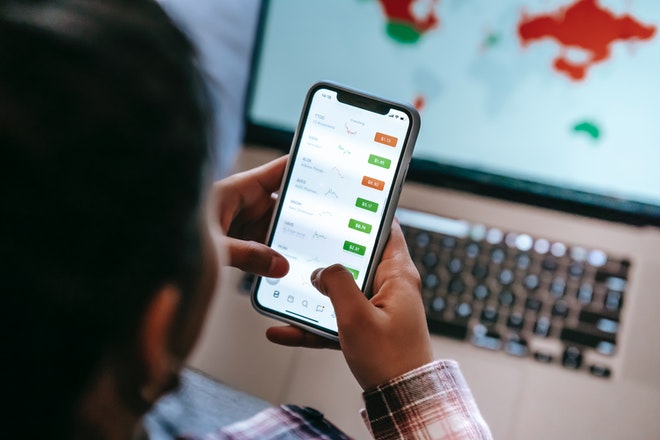
Table of Contents
Best Apps For Financial Management
What Is a Budgeting App?
A budgeting app is an app designed to help you optimize the spending and savings choices you make each month. By putting all your financial commitments and goals in one place, a budgeting app can give you better visibility into your financial choices and habits.
Similar to the apps you may use from your bank or credit union, a budgeting app may provide additional functionality such as financial goal setting and cash flow tracking across multiple financial accounts. Budgeting apps can sync with your bank and credit card accounts to provide a holistic view of your finances.
Some budgeting apps will use a specific budgeting approach—like envelope or zero-based budgeting—while others will address budgeting more generally, allowing for customization based on your needs. A fully featured budgeting app can help you track spending, manage recurring bill payment, set savings goals and manage monthly cash flow.
Do Budgeting Apps Really Work?
Budgeting apps are a great tool to help ensure you’re living your budget, not just planning one. They can provide insights into your spending habits, identifying where your money goes and where you can make improvements.
As with any app, whether or not it “works” depends largely on how you use it. A challenge with budgeting generally—whether managed with an app, a spreadsheet, or more manual means—is committing not only to having a budget but to making your financial decisions in line with it. Many people find that the interactivity and automation provided by a budgeting app helps keep them motivated to stay on top of their personal finances.
How to Choose a Budgeting App
Choosing a budgeting app can seem like a small decision when compared to other personal finance decisions. But the right budgeting app can make a big difference in your personal financial life.
When selecting a budgeting app, be sure to consider what your needs and goals are first. The right budgeting app can provide you helpful insights and data into your expenses and savings. But before that happens, identifying your financial goals can help you refine your search for the right budgeting app for you.
Outside of your goals, here are a few features to consider before you commit to a budgeting app:
Fees. Budgeting apps differ in their costs. Many budgeting apps are free—or offer free versions—while some charge a monthly fee. While it may be tempting to choose a free app, don’t overlook the paid apps. If a budgeting app can significantly improve your financial outlook, it may very well be worth the investment.
Features. Each app has unique features and benefits, so it may make sense to test a few different apps to see which one best fits your needs. If you’ve used a mobile banking app, you have a head start on the features you’ll be seeking. Typical features in the leading budgeting apps include: connecting all your financial accounts, receiving notifications of upcoming bill payments, designing a budget, credit score tracking, tracking spending, setting up financial goals and more.
Security. The security of your personal information is extremely important, especially around banking data and logins. While most budgeting apps have some level of security, some are more sophisticated than others. Be sure to look into the level of security encryption of each app. On their websites, you may find security features such as 256-bit encryption and multi-factor authentication. Along with using a secure Wi-Fi network, features like this will help deter intruders from accessing your information.
Customer service. If you run into an issue when using a budgeting app, having a technical team you can reach out to can be helpful. When selecting a budgeting app, be sure to find out what customer service options are available, both from the app and from the desktop version, if applicable. It also may help to read reviews of others’ experiences with the app you’re considering.
What Makes for a Successful Budget?
Budgeting is a process that begins with identifying your financial goals, along with observing your spending and savings habits. When you truly understand how much money is going out and coming in, you’re better prepared to handle both the expected and unexpected financial challenges life brings.
The mindset you bring to managing your money is important. Establishing a budget is a critical first step to gaining control over your finances. If you’re never worked with a personal budget, it may take a few cycles for your habits to catch up. And, if you have money habits you need to improve on, the right app can help.
Summary of Best Budgeting Apps 2022
Budgeting App Best For
Personal Capital Investors
Mint Monitoring Daily Activity
YNAB (You Need A Budget) Achieving Financial Goals
PocketGuard Tracking Spending
Goodbudget Budgeting Using Envelopes
Stash Getting Started With Investing
Honeydue Couples
Digit Passive Saving and Investing
Methodology
To create this list, Forbes Advisor analyzed 15 budgeting apps. We ranked each budgeting app on 18 data points within the categories of consumer ratings, costs associated with the app, security and encryption of consumers’ data, desktop availability and the ability to share the app with someone else.
The following is the weighting assigned to each category:
Mobile app rating (App Store and Google Play): 35%
Cost: 25%
Encryption/Security: 15%
Account integration capabilities: 10%
Website version available: 10%
Ability to share: 5%
Budgeting apps with a higher overall rating relative to its number of reviews ranked higher on our list, as did those that are completely free. We also prioritized mobile apps with advanced security features, like biometric authentication, multifactor authentication and encryption. Apps that allow the ability to connect an unlimited number of accounts moved toward the top of our list, as did apps that also have a website version and allow for sharing with family or friends.
Frequently Asked Questions (FAQs)
What is the best budgeting app?
What are the best free budgeting apps?
What is the easiest budgeting app?
money manager app
What do budget apps do?
There are two main types of budget apps. The first is an expense tracker. This is mostly used by people who deduct a lot of stuff from their taxes. Business owners who travel a lot, bloggers like us, truckers keeping track of meals and miles driven, and all sorts of other professionals use expense trackers. This lets you know how much money you spend on all the stuff you need for your job (and life). You then have all the info you need when tax season rears its ugly head.
The other style of budget app is the one you’re probably thinking of. It keeps track of your bank budget, your expenses, bills, utilities, and other such things. These are useful for keeping track of where your money goes so that you lose less of it. They are especially helpful for folks who manage multiple accounts at once and pay a lot of their bills online.
AndroMoney
Price: Free (with ads)
AndroMoney is one of the most popular and successful expense trackers on Google Play. The app offers cross-platform support for the web and iOS as well. Some of the features include multiple accounts, support for account balances and transfers, budgeting functions, support for multiple currencies, and backing up to Excel if needed. The design is surprisingly clean and the analytics are laid out in a logical and easy-to-read manner. We also love that this is a free app. There are ads, but it’s hard to maintain a budget when you’re spending a hundred dollars a year on a subscription option. In any case, there isn’t a whole lot wrong with this app. It seems to work quite well.
Financial Calculators
Price: Free / $4.99
FInancial Calculators is one of the best budget apps
Financial Calculators is a vital tool when figuring out your budget for the future. The app is essentially a collection of calculators that can help you figure out various things. For instance, it has a loan calculator so you can see what your payments and interest will be like. This app has around three or four dozen calculators in total that range from home buying to fixed vs adjustable rate and even a return-on-investment calculator. It won’t manage your money, but it’ll help you make fewer bad decisions on upcoming purchases. It’s one of the must-have budget apps.
See also: The best calculator apps for Android
Goodbudget
Price: Free / $6.00 per month / $50 per year
Goodbudget is a fairly popular app for budgeting. It features cross-platform support so you can check it out on Android, the web, or iOS if you want to. Everything syncs between those platforms. Additionally, you’ll get expense tracking, income tracking, and some other decent budgeting tools. It uses Material Design and it looks lovely. You can also export your data as a CSV file, QFX (for Quicken), and OFX (Microsoft Money) in case you need that. It’s one of the more simple budget apps. Some of the main features are free. The rest require a subscription.
Google Sheets (and similar apps)
Price: Free
Short of getting a piece of paper and writing it down, using a spreadsheet is about as old school as it gets. Google Sheets and similar apps work very well as budget apps. Simply fill in the cells with your income, expenses, and other data. You can then see what you make and spend every month. Google Sheets is completely free so we’ll recommend that one. However, pretty much any office app (with spreadsheets) or spreadsheet app will do the trick. It’s old school, but it’s also much simpler. It’s a good option for those who are highly security conscious.
See also: How to use Google Sheets: Basic tutorial, formulas, and more
Mint
Price: Free
Mint screenshot 2020
Mint is actually a replacement for an older app called Mint Bills. Both are developed by Intuit, the same company that does TurboTax. This one has a lot of features. You can see everything in one place, manage your bills and money, and even pay your bills if you want to. It will also provide your credit score, remind you of upcoming bill payments, multi-factor authentication (for security), and a web app that you can use. Some are lamenting the death of Mint Bill. It received a lot of one-star reviews as a result. However, it seems to have rebounded.
Monefy
Price: Free / $2.50
Monefy is one of the more simple budget apps. Its claim to fame is how quick it is to use. The app tries to set itself up in a way that makes adding new data quickly and easily. It usually does a pretty a decent job. Alongside that, you’ll get various currency support, a built-in calculator, passcode protection, Dropbox integration, widgets, and more. The interface takes a moment to learn. However, once you get into using the app, it really is easy. You can pick up the free version using the link above and the pro version costs $2.50.
Conclusion
Let us know your thoughts in the comment section below.
Check out other publications to gain access to more digital resources if you are just starting out with Flux Resource.
Also contact us today to optimize your business(s)/Brand(s) for Search Engines