If you’re having trouble optimizing your content for SEO, this tool will help you identify the right keywords to use in your content.
Table of Contents
Google Seo Tools Keyword Ideas
1. Semrush
Semrush works a little differently than the other tools I will show you.
Instead of entering a seed keyword and getting a long list of keyword ideas, Semrush shows you keywords that your competition already ranks for.
(These are usually outside-the-box keywords that would be impossible to find using any other tool.)
Here’s how it works:
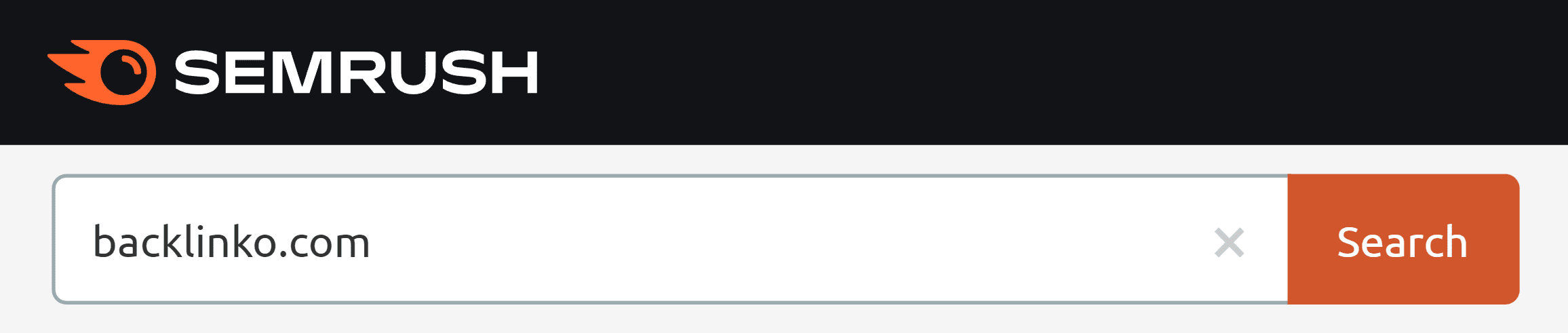
First, enter a competitor’s domain name in the field at the top of the page.
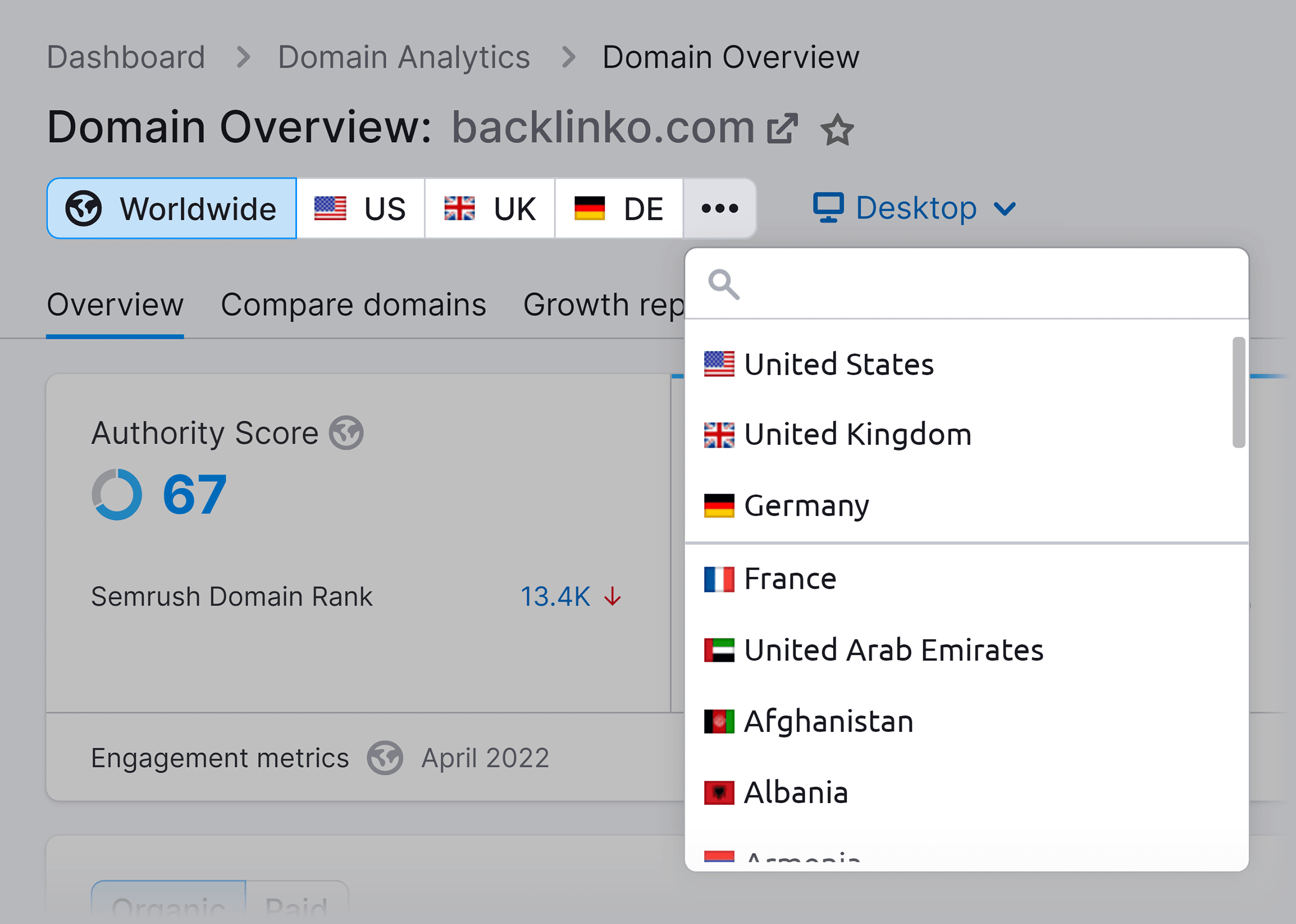
If you’re doing SEO in a country outside of the US (for example, in Google.co.uk), you can choose to see information about that specific market. Just choose that country from this menu:
Next, take a look at the “Organic Research” section:
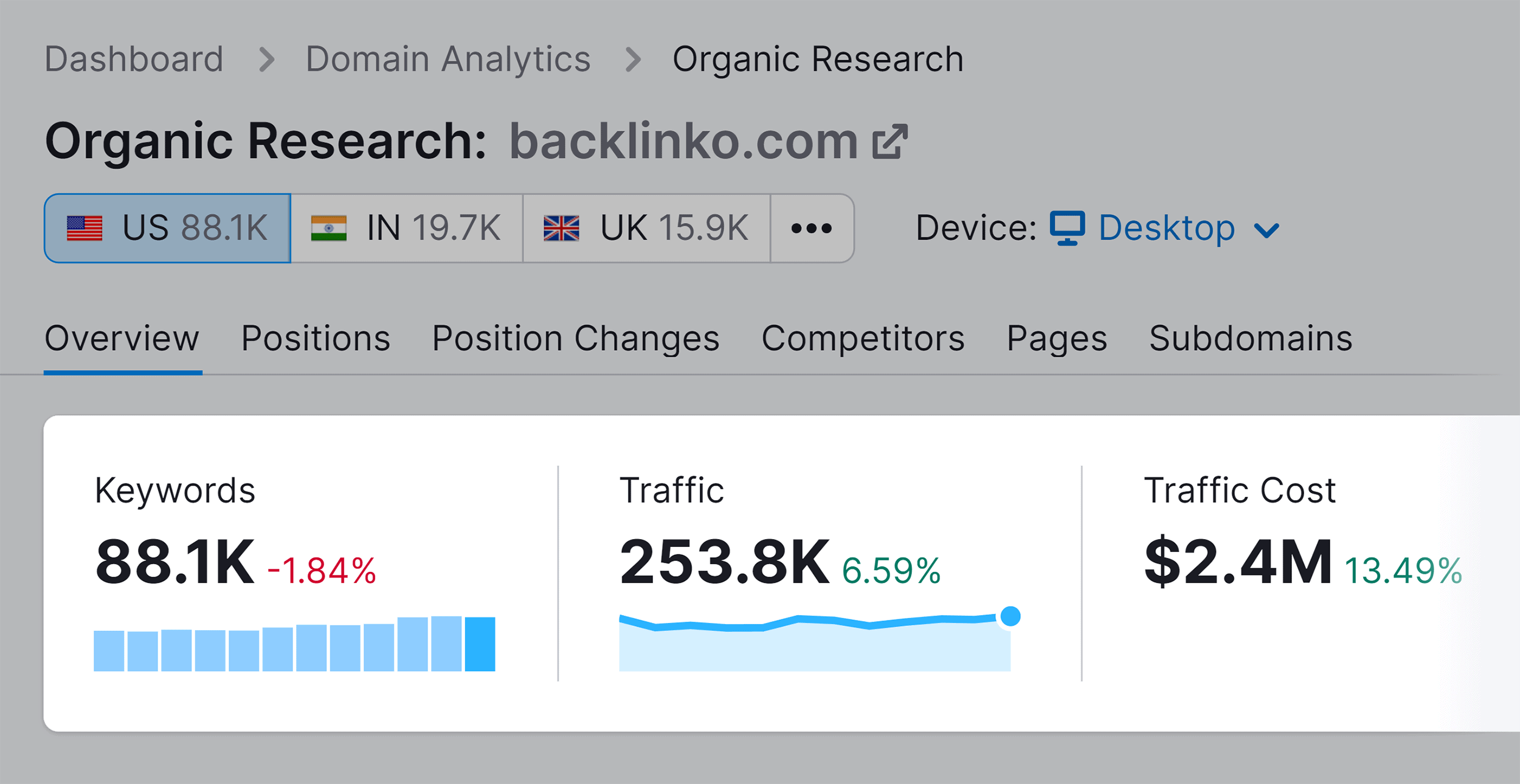
Here’s what the different terms in that section mean:
- Keywords is the estimated number of monthly organic visitors that come from Google.
- Traffic is the estimated number of monthly visitors.
- Traffic Cost indicates how valuable this traffic is (based on Google Ads CPC).
So if you see a domain with a lot of Organic Search Traffic but a low Traffic Cost, you know that they’re ranking for keywords that don’t convert into buyers.
But the real value of Semrush comes from the “Organic Keywords” data:
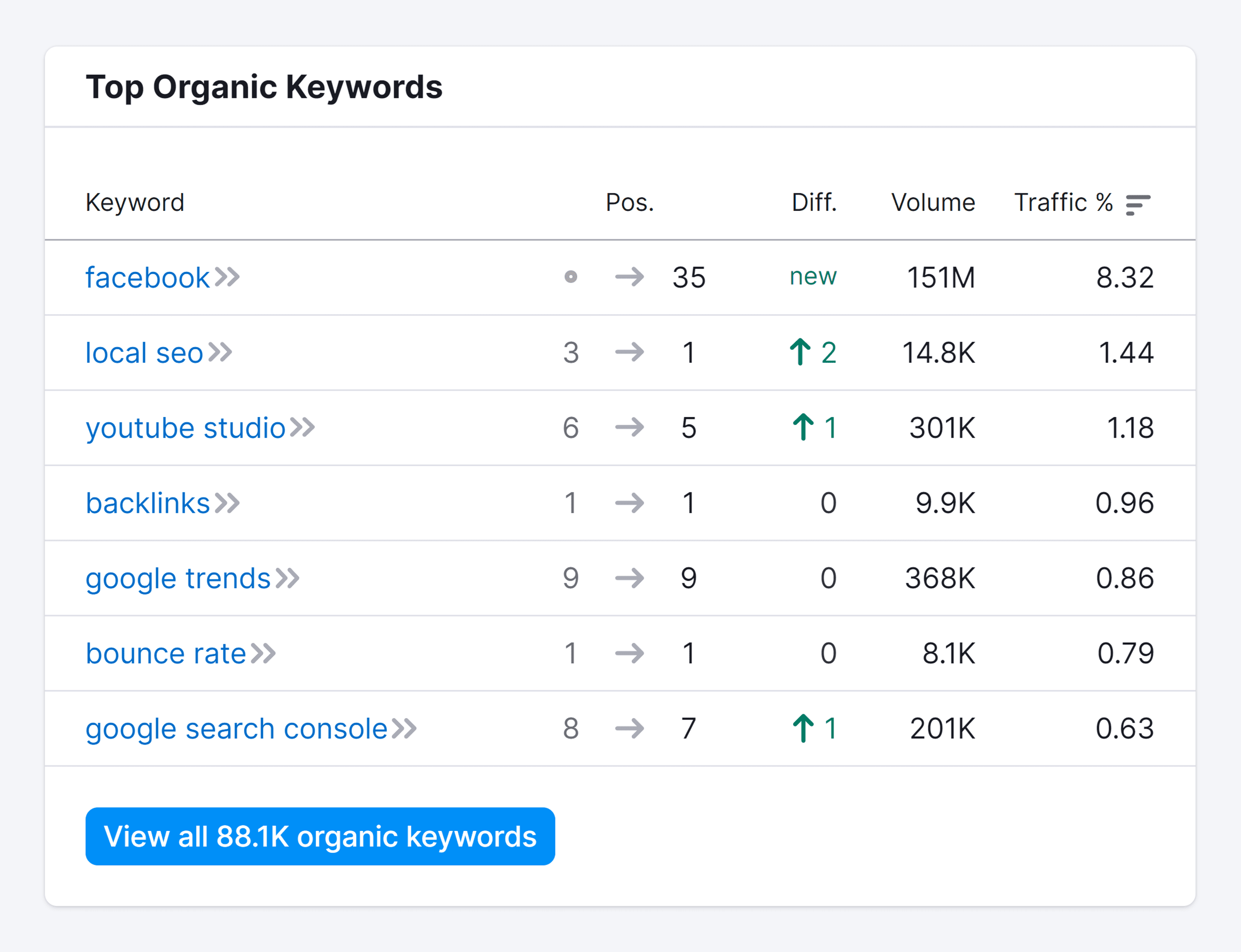
This box will show you 5 of the top keywords that your competitors are ranking for. To see more, click on “View all [number] organic keywords”.
And you’ll get a list of all of the keywords that the site or URL ranks for:
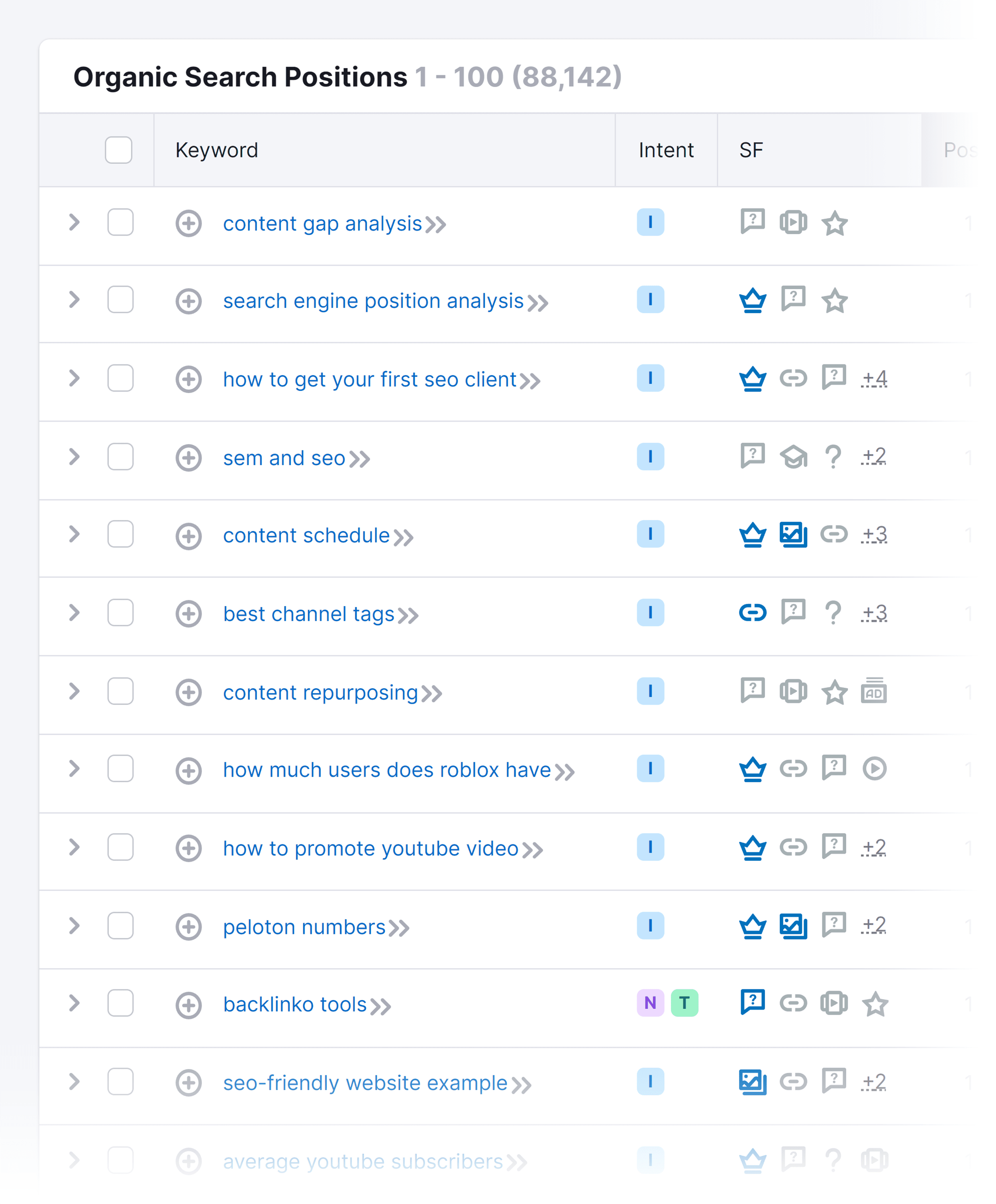
This page alone will usually give you a handful of solid keywords.
But if you want more ideas, go back to the “Organic Research” overview and check out the “Competitors” in the menu bar.
And you’ll see that site’s first-page competition:
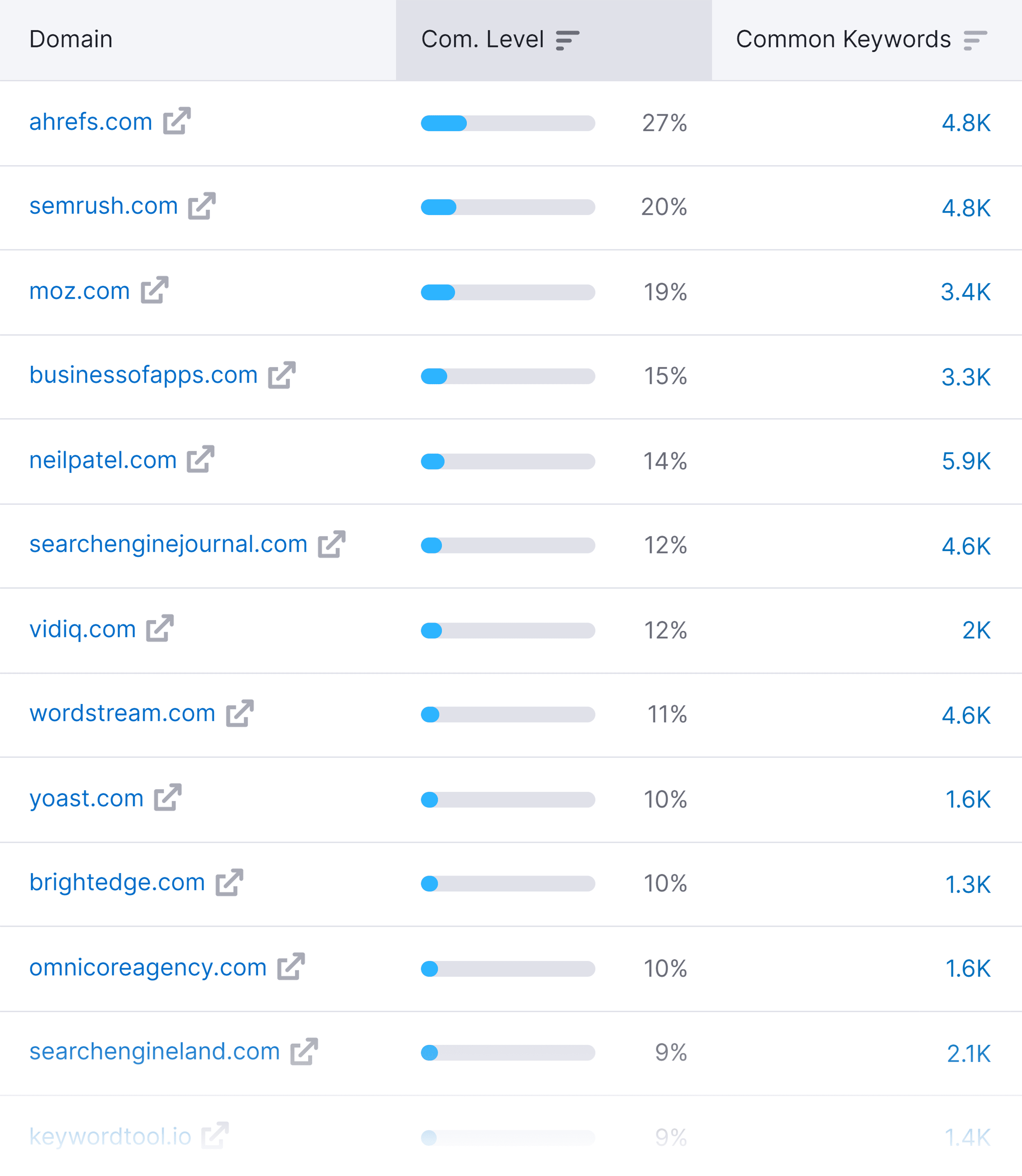
When you click on one of THOSE results, you can see the exact search queries they’re ranking for.
There will be some overlap from what you just saw, but you’ll also (usually) dig up some real gems.
You can also start your Semrush search with a keyword instead of a competitor’s site:
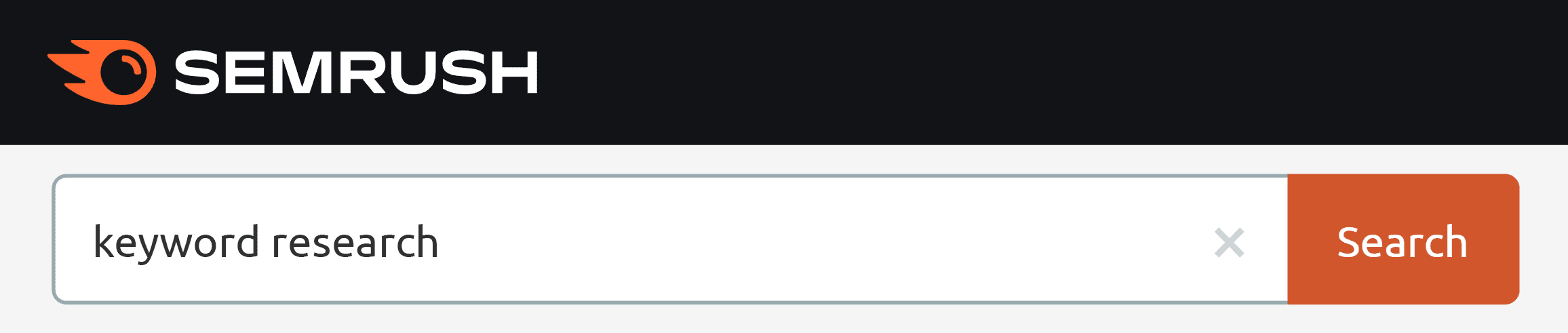
Semrush will show you a “Phrase match report”, which is a list of long-tail keywords that include the keyword you entered:
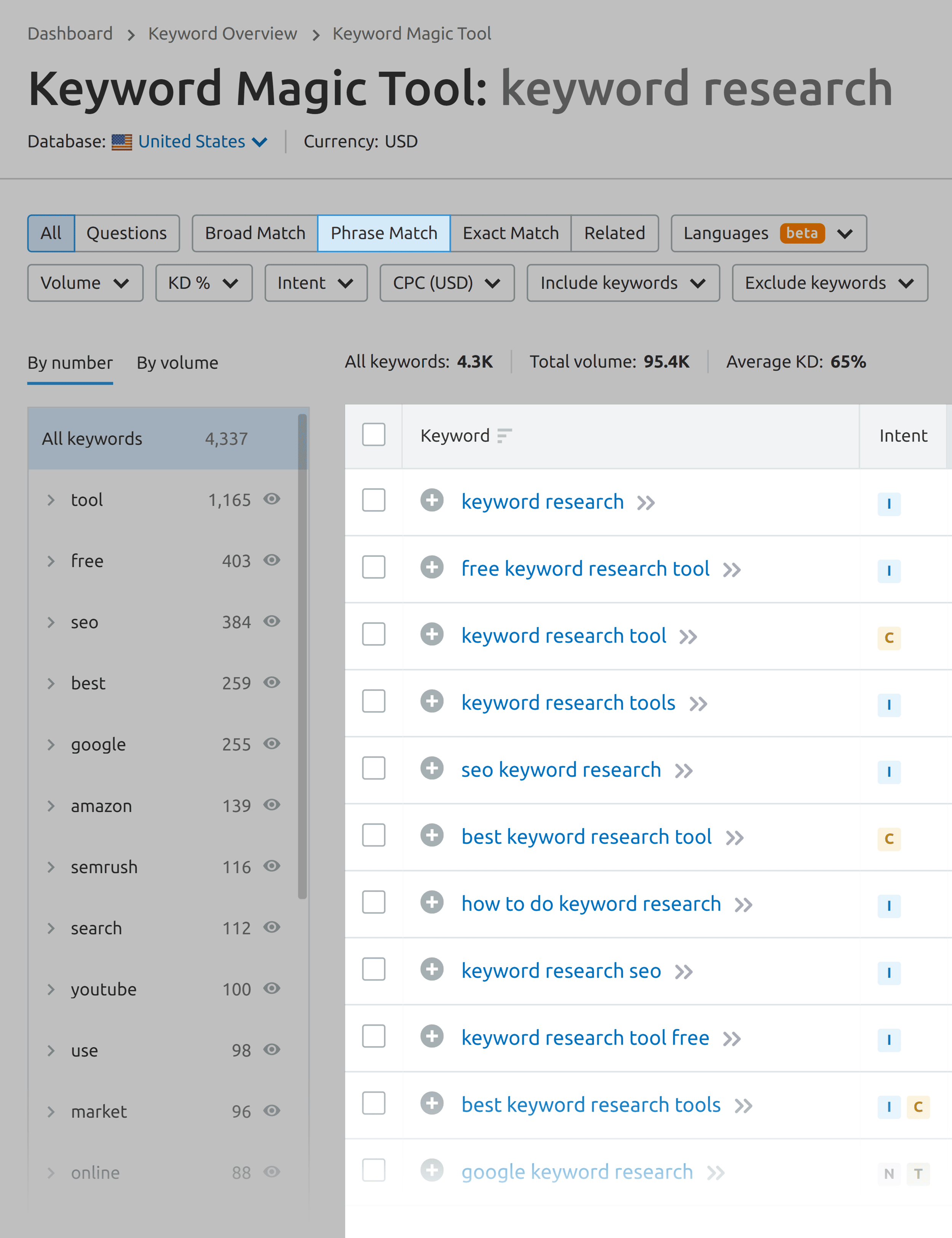
This is really helpful for finding long-tail variations of Head and Body Keywords.
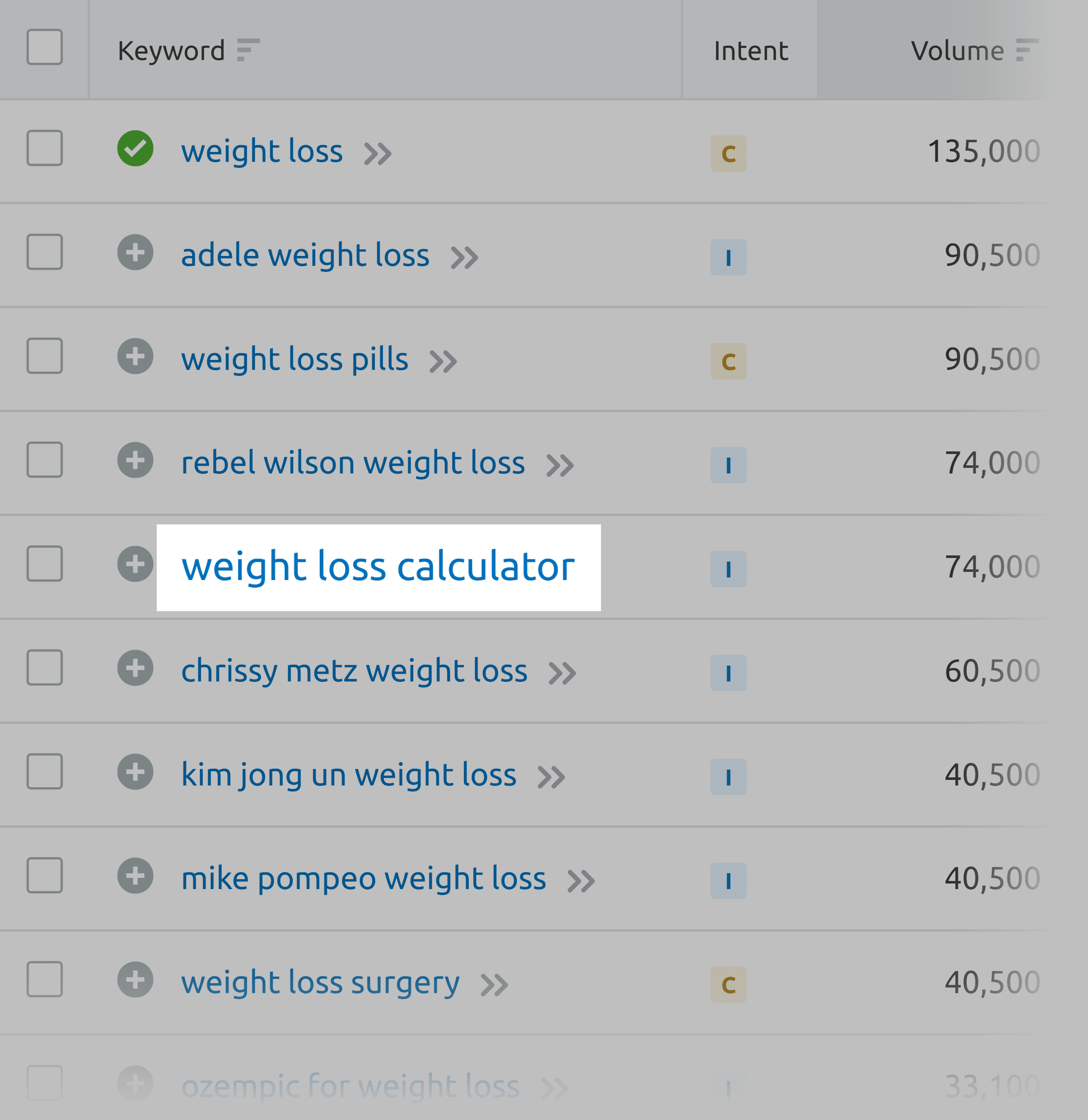
For example, if you wanted to rank for the keyword “weight loss”, you’ll quickly find that it’s simply too competitive.
But Semrush will show you long-tail variations, like the “weight loss calculator”, that are MUCH easier to rank for:
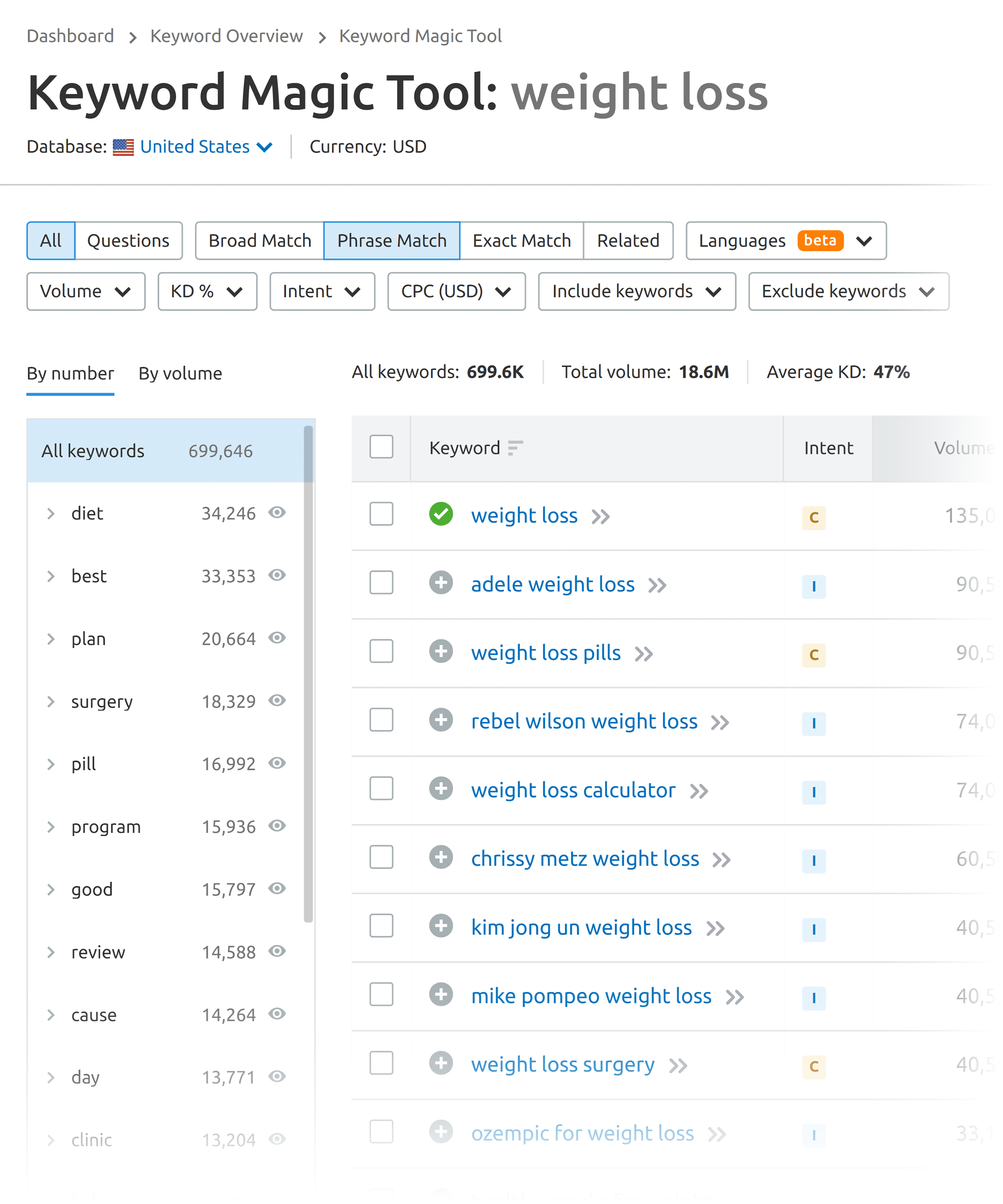
My Favorite Feature: Keyword Magic
This tool pulls keyword suggestions from Semrush’s massive database of over 21 billion terms.

BRIAN’S BOTTOM LINE
Semrush is my favorite keyword research tool. Not cheap. But if you’re serious about SEO, it’s a must-have.
2. Soovle
Scrape suggested keywords from multiple sources.
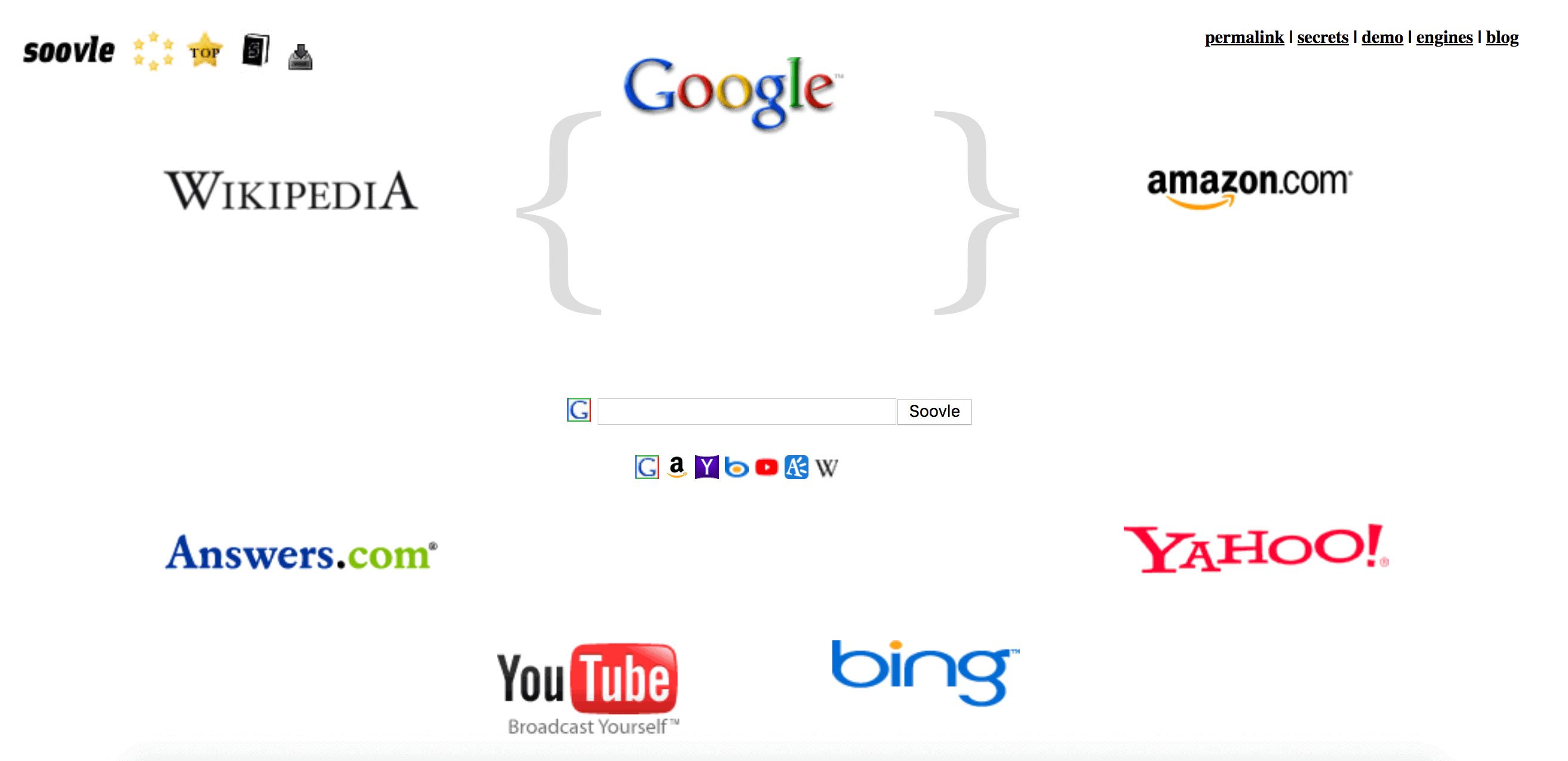
Soovle gives you suggested keyword ideas from Google, YouTube, Bing, Yahoo, Amazon and more.
(All in one place.)
That way, you can find untapped keywords that your competition doesn’t know about.
My Favorite Feature: Saved Suggestions
Easily save your favorite keyword ideas with Soovle’s “drag & drop” saved suggestions feature.
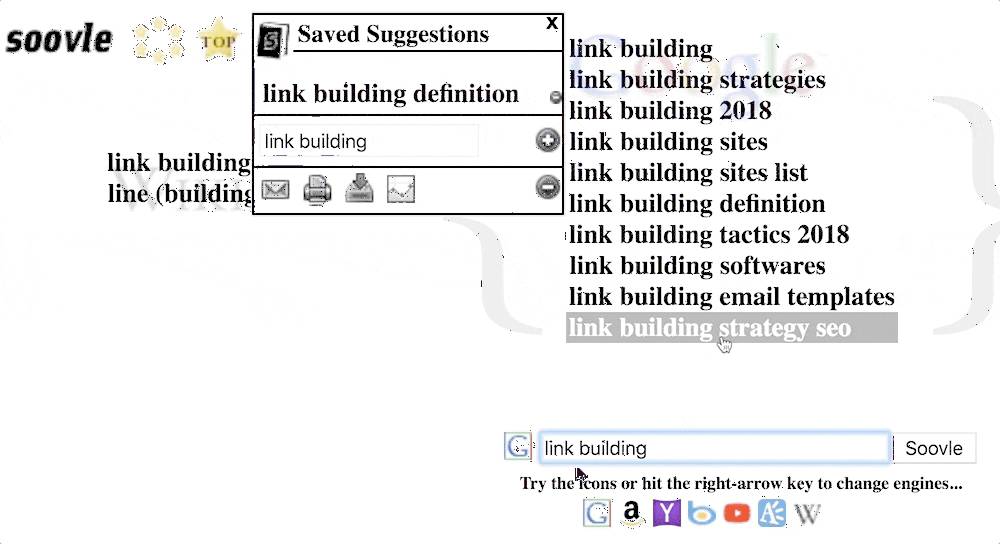
Then, download your favorite keywords to a CSV file.
BRIAN’S BOTTOM LINE
Soovle is one of the best free keyword research tools out there.
3. Jaaxy
Get thousands of related keyword ideas within seconds.
This is a straightforward (yet powerful) tool.
So, what makes Jaaxy unique?
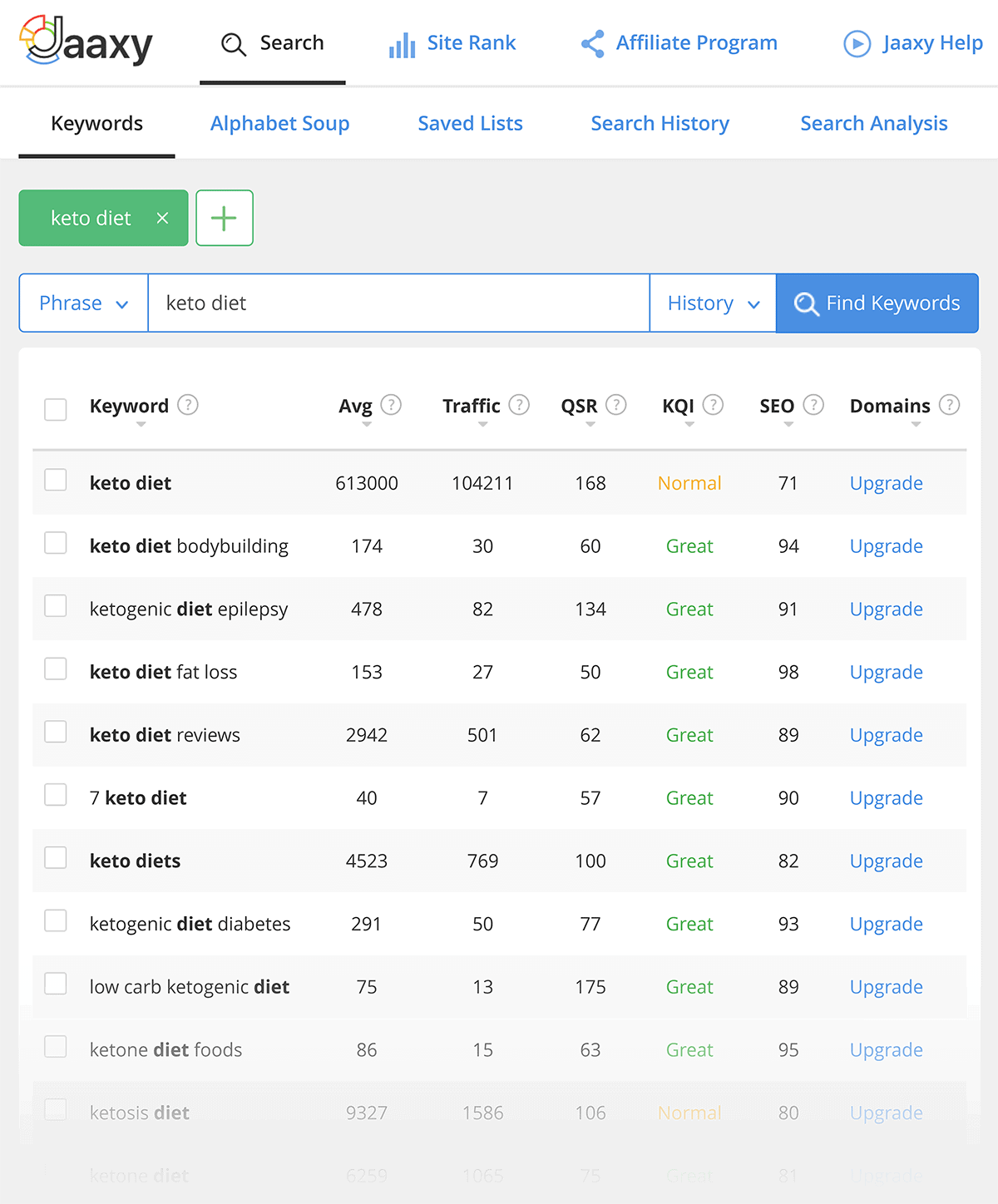
First off, it gives you LOTS of different keyword ideas.
(Including some that you won’t find in most other tools.)
Plus, you get helpful data on every keyword that it generates (including competition, search volume and potential traffic).
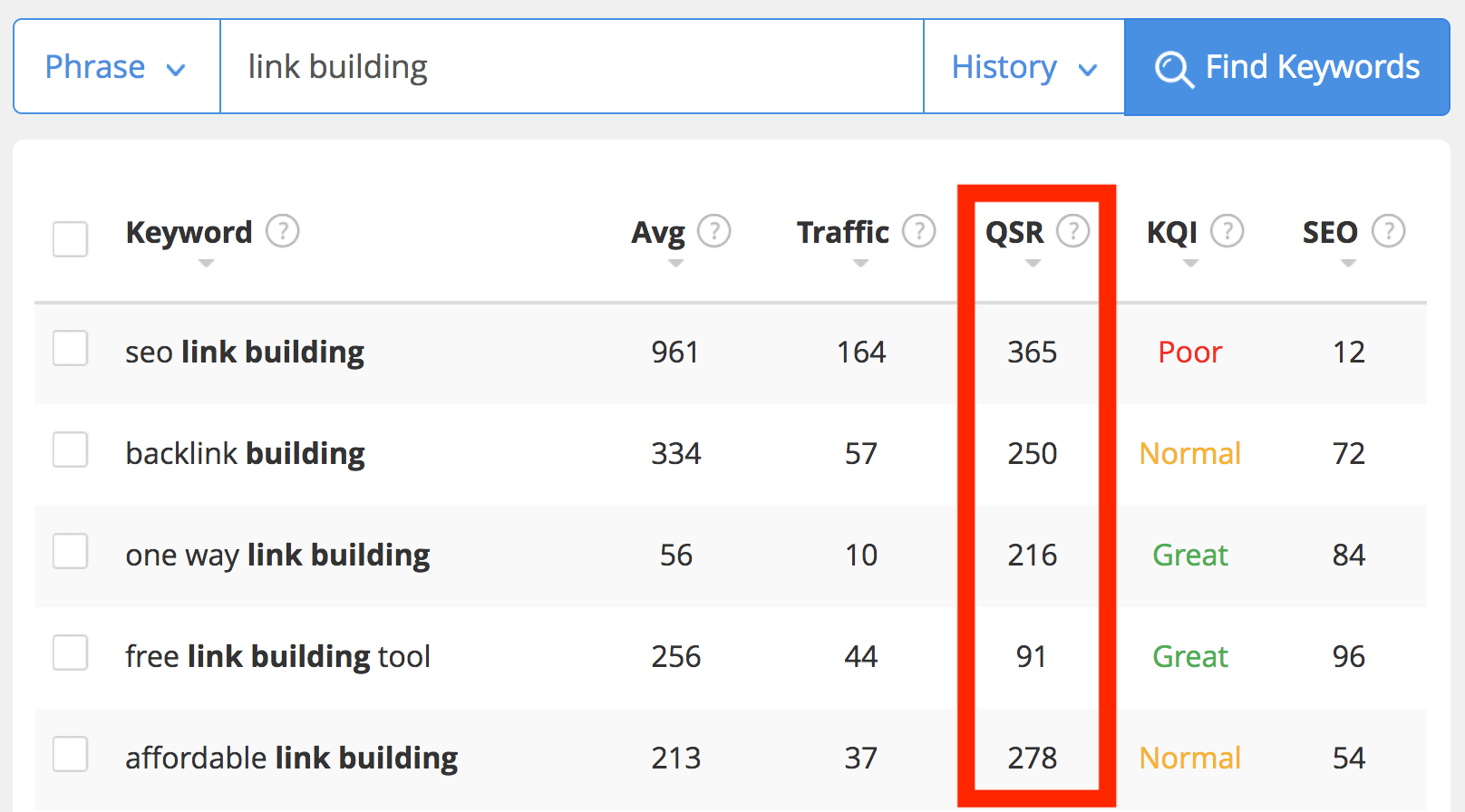
My Favorite Feature: QSR
QSR stands for “Quoted Search Result”.
This is a fancy way of saying: “how many other websites are trying to rank for this exact term?”.
Obviously, the lower this number, the better chance you have of ranking #1.
BRIAN’S BOTTOM LINE
Jaaxy is a decent freemium tool. Not nearly as good as something like Semrush. But at $50/month, it’s not a bad deal.
4. Google Search Console
Find hundreds of “Opportunity Keywords”.
The Google Search Console isn’t a traditional keyword research tool.
But it does have a feature that makes finding awesome keywords a CINCH.
The feature?
The Performance Report.
This report list out the pages on your site that get the most clicks from Google.
(And the exact keywords that brought them there)
So: how can you use this feature for keyword research?
It’s easy: use it to find “Opportunity Keywords”.
Opportunity Keywords are where you rank between #8-#20 in Google for a specific keyword.
And with little extra on-page SEO, you can find yourself with a nice rankings boost.
For example, my average rankings for the keyword “SEO tool” is 6.2.
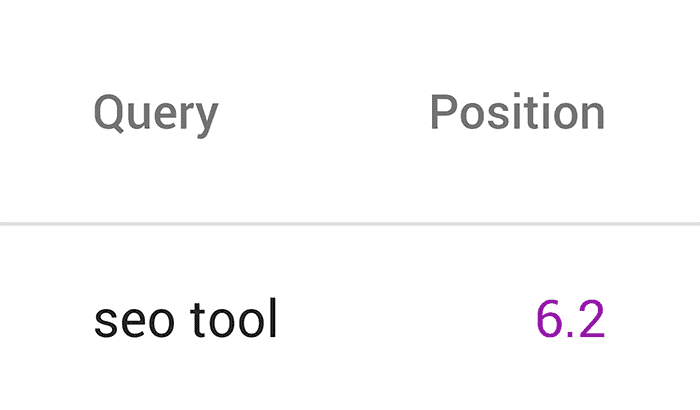
That keyword is an Opportunity Keyword. And if I optimize my page around “SEO tool”, my rankings for that term should go up.
My Favorite Feature: Google Analytics + Google Search Console
Did you know that you can combine your Google Search Console and Google Analytics accounts?
Well, you can.
And it’s VERY helpful.
When you do, you’ll get in-depth keyword data than you would with either tool by itself.

BRIAN’S BOTTOM LINE
The Google Search Console is an underrated keyword research tool. No other tool can help you find Opportunity Keywords like the GSC.
5. Ahrefs Keywords Explorer
Make smarter keyword decisions.
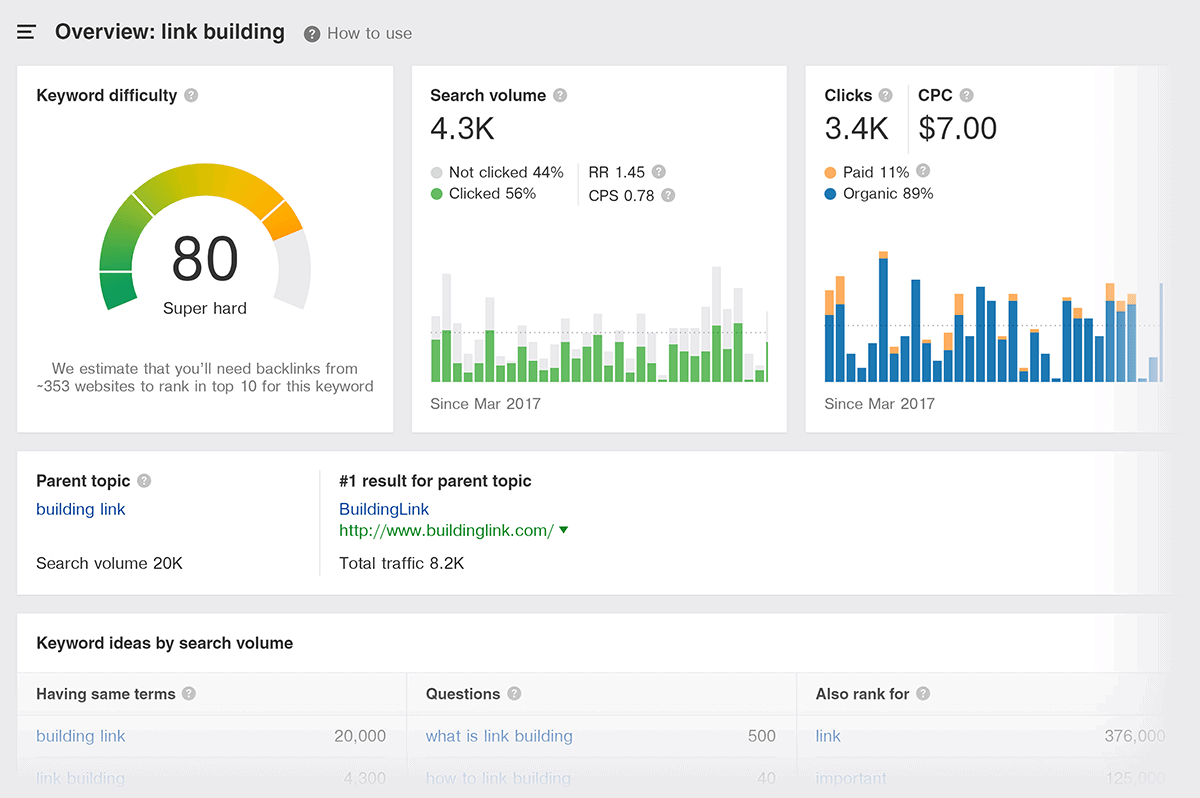
Ahrefs recently rolled out a new and improved “Keywords Explorer”.
And what I like most about Keywords Explorer is this:
It gives you SUPER in-depth information on each keyword.
Sure, you get the data you’d expect (like search volume). But you also get a breakdown of the first page competition… and how many searchers actually click on a result.
My Favorite Feature: Keyword Difficulty
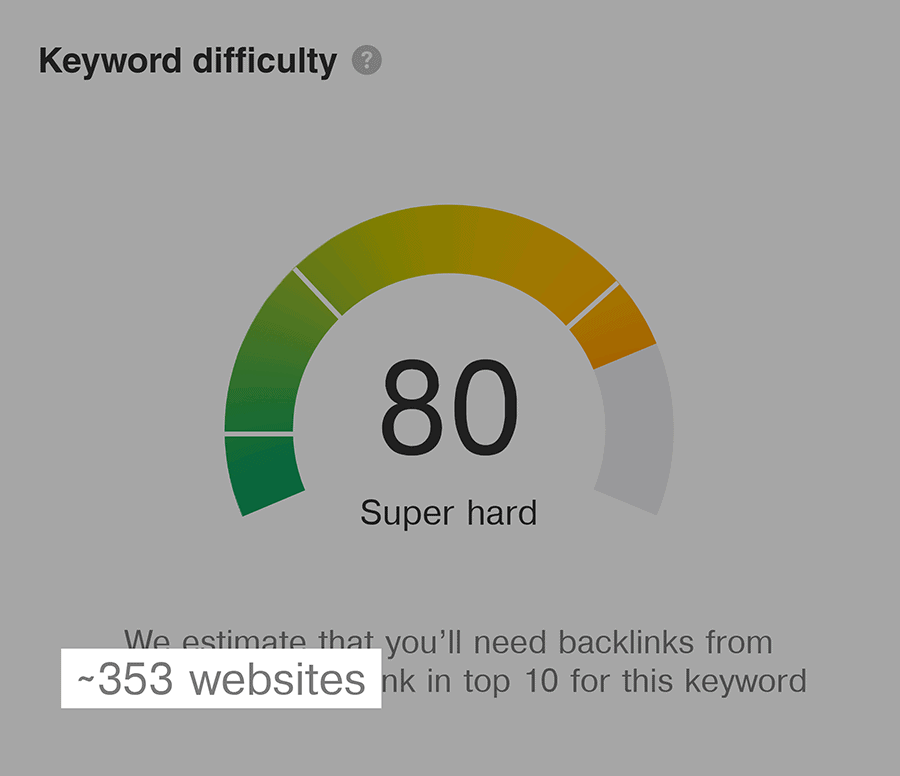
Most keyword research tools give you vague difficulty info (like “easy” or “difficult”). Or a score (like “89/100”).
But Ahrefs tells you EXACTLY how many backlinks you’ll need to rank on the first page of Google.
Awesome.
BRIAN’S BOTTOM LINE
Ahrefs is mostly known as for backlink analysis. But I have to say: it’s got a killer keyword research tool. I find myself using it more and more every week.
6. SECockpit
Keyword research for SEO pros.
This a Swiss Army Knife of keyword research tools.
Like any other keyword tool, you give SECockpit a seed keyword… and you get a list of results.
But what makes SECockpit unique is the built-in features that allow you to get A LOT of depth on search trends, organic competition and traffic estimates.
Which means that it’s a tool largely designed for SEO professionals.
Sure, newbies can get value out of this tool. But there’s no doubt that SECockpit is targeted for people that sleep, eat and breathe SEO.
If you’re brand new to SEO, the sheer number of features in this tool might be overwhelming for you. But if you’re looking for lots and lots of depth, you’ll probably get your money’s worth.
With that, here’s how it works.
When you login you’ll automatically go to your Dashboard, where you can create projects around sets of keywords…or jump right in with a single keyword search.
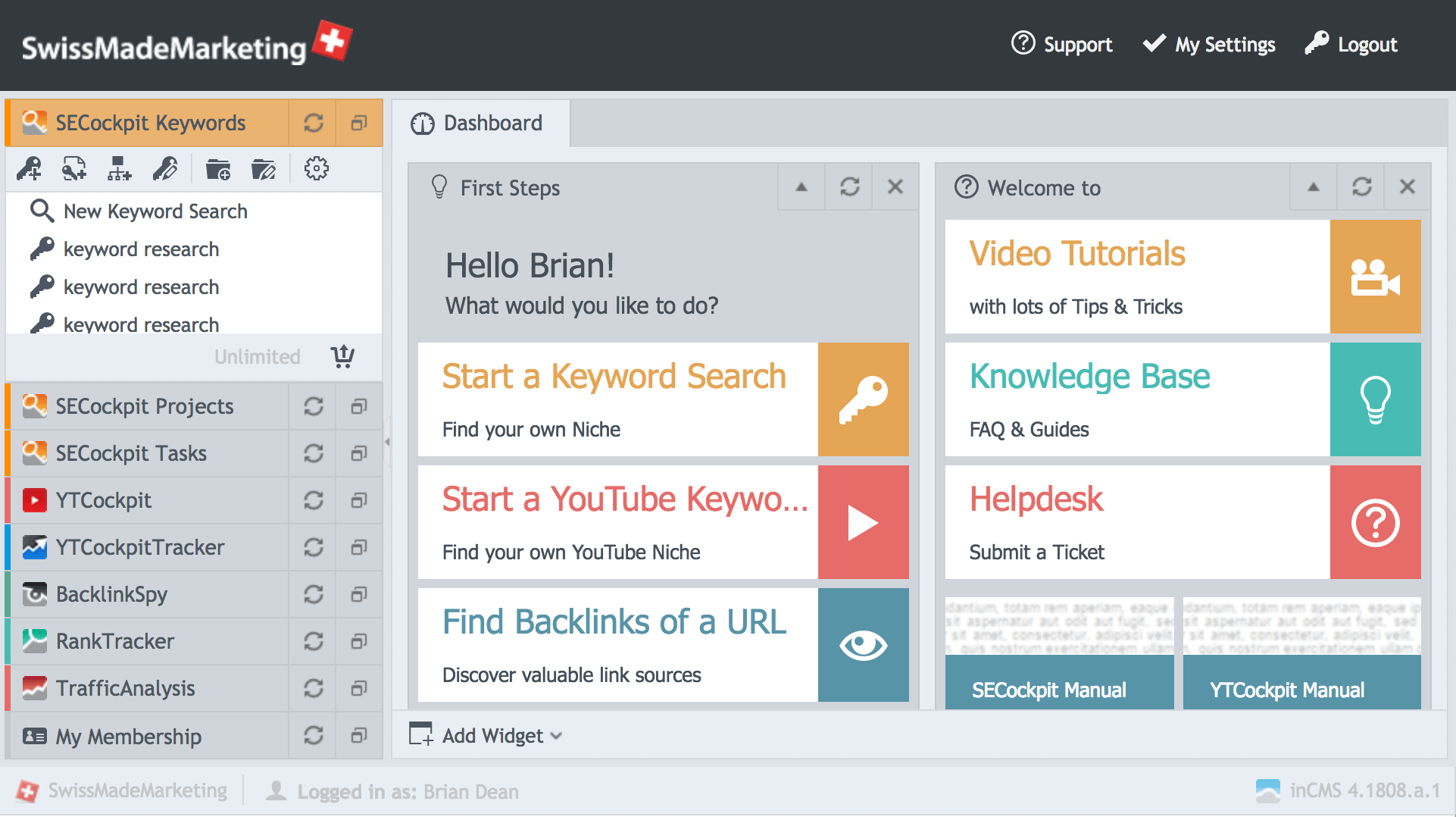
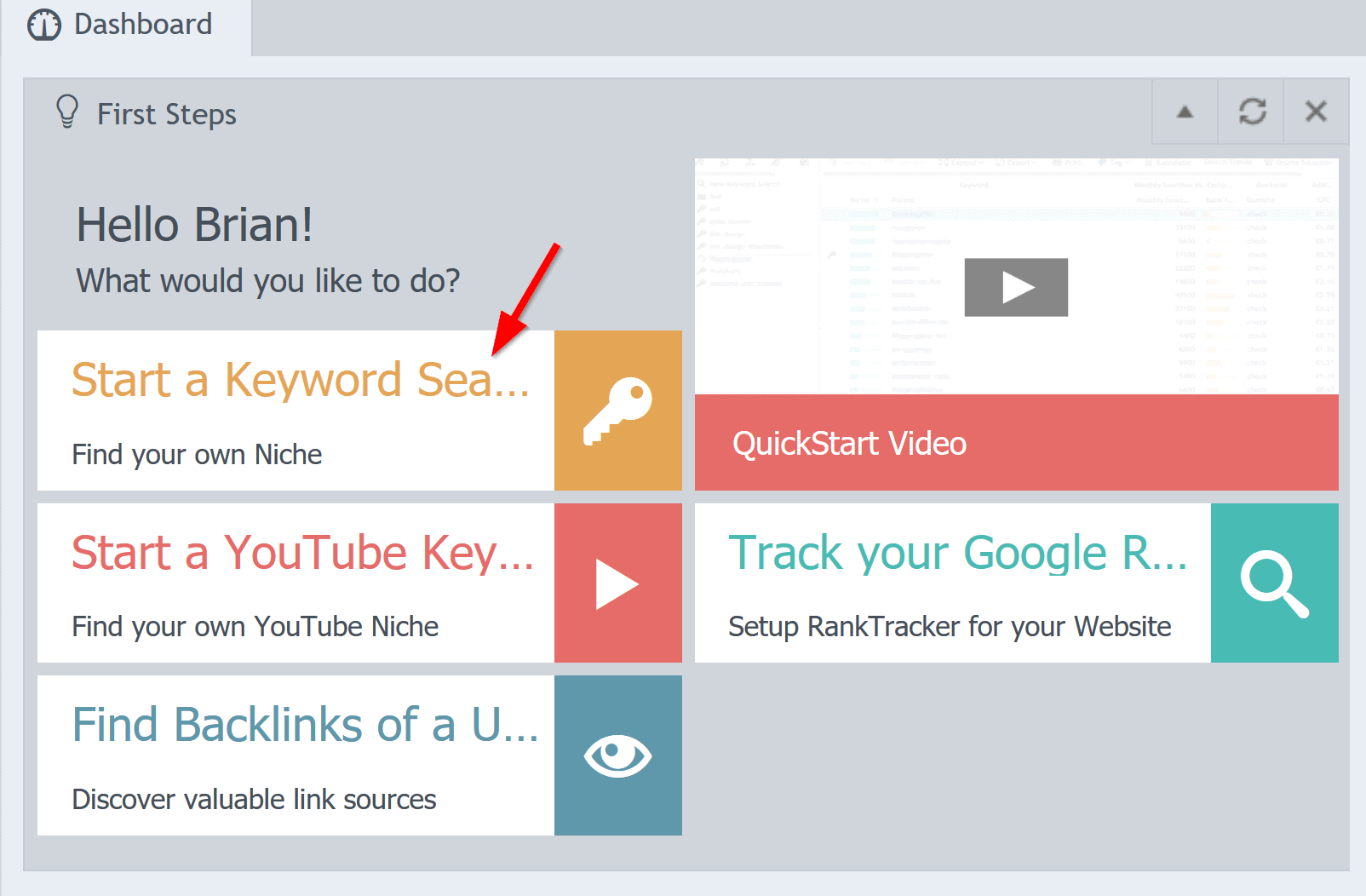
To start the keyword research process, click on “Start a Keyword Search”:
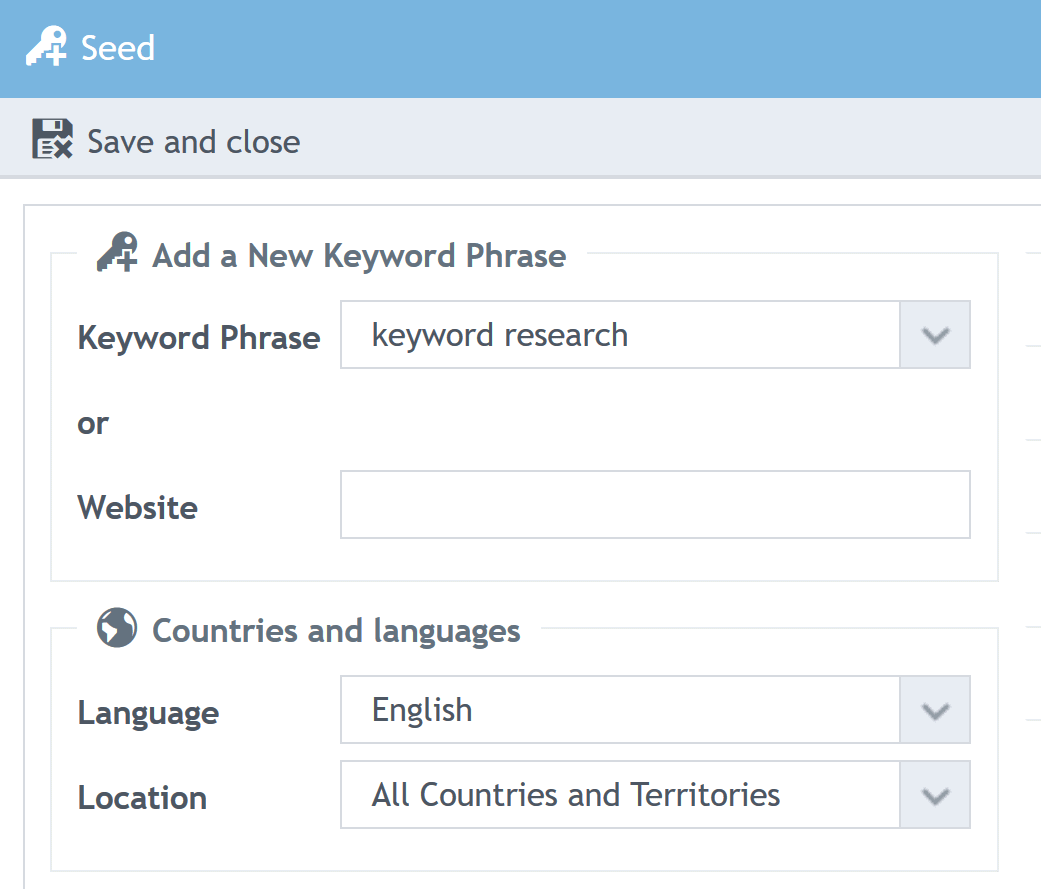
Then, enter a seed keyword in the field marked “Keyword Phrase”:
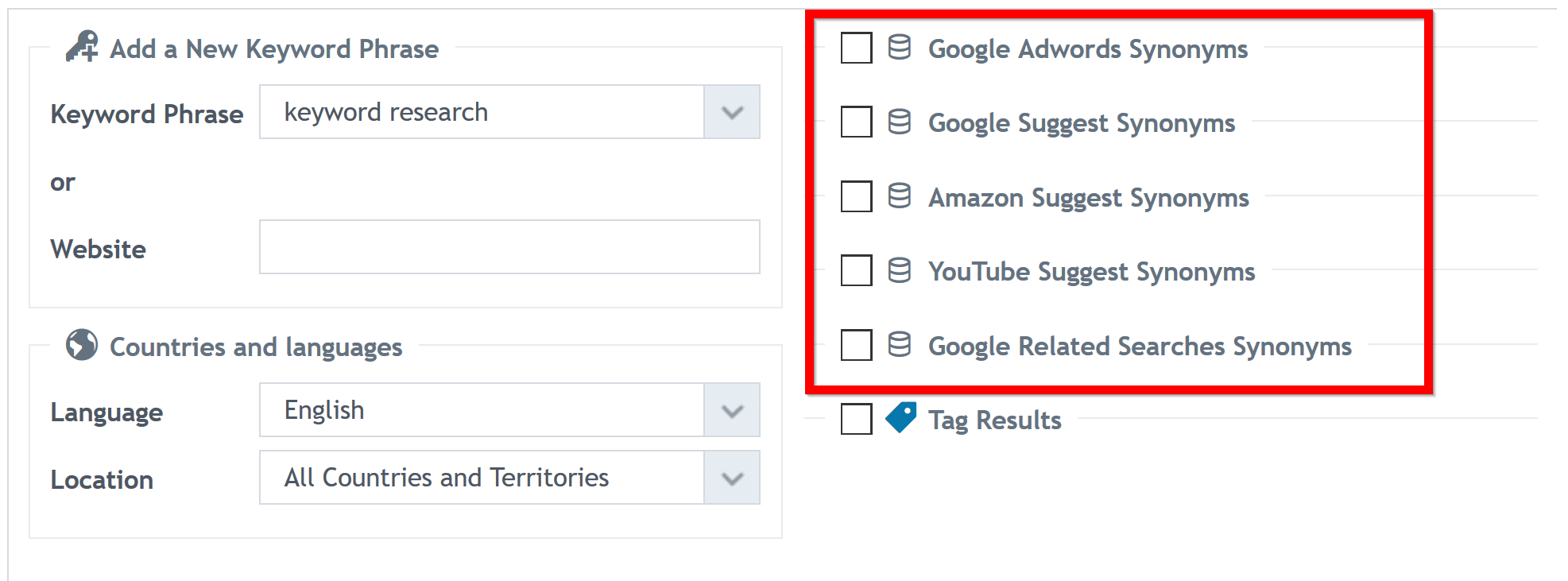
You can get even more results by choosing to include Google Suggest, Related Searches and synonyms pulled from Google Ads:
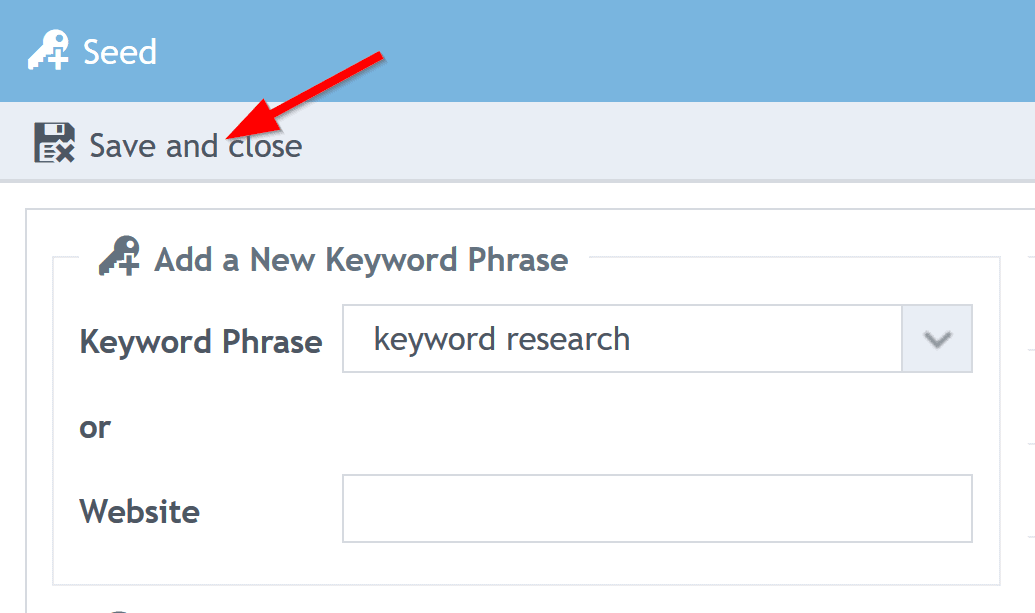
When you’re done, click on “save and close” and the tool will get to work:
Here’s the report you’ll get:
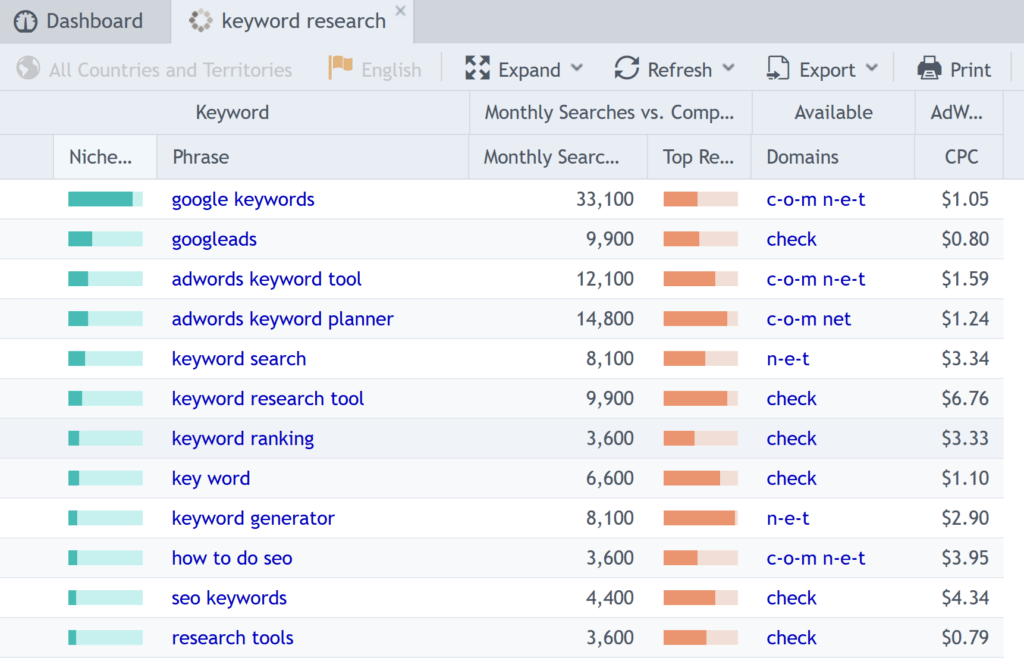
If you’ve ever used the Google Keyword Planner, the data here should look familiar to you.
In fact, the columns “Phrase”, “Monthly Searches” and “CPC” are pulled directly from the GKP:
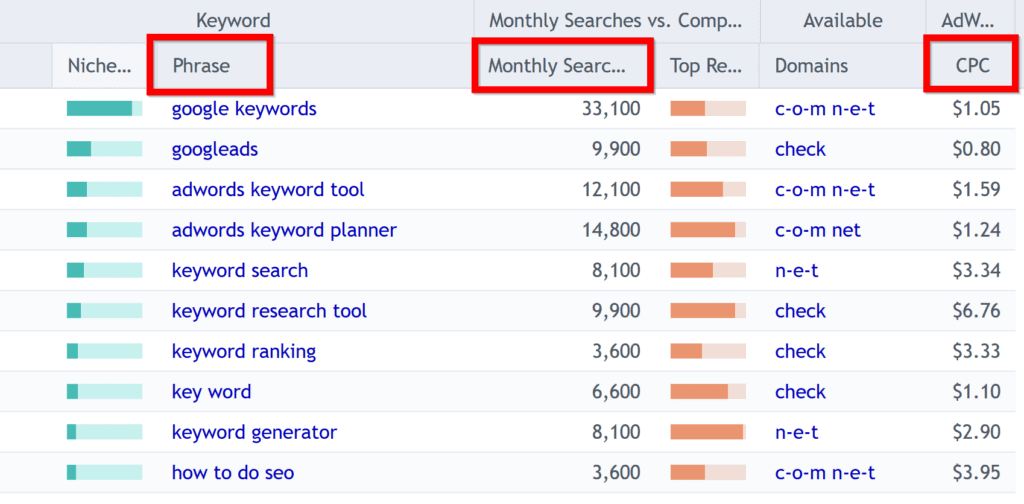
(The only difference is that CPC is called “Top of page bid” in the GKP)
So: what does the other information in SECockpit mean?
Well you’ll notice a bunch of green bars under the column labeled “Niche”:
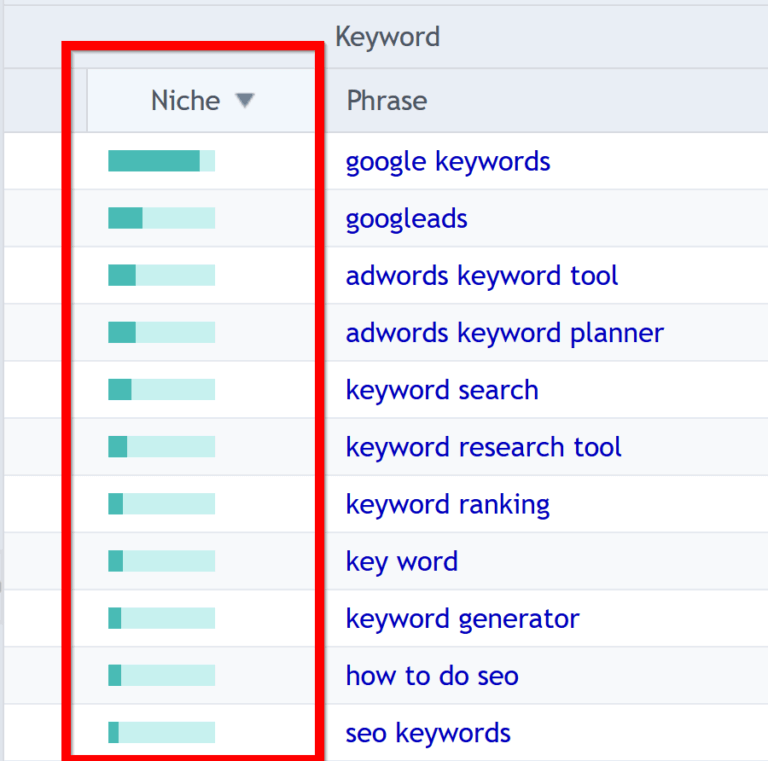
This bar is a single metric that takes into account first page competition, monthly search volume, and commercial intent. In other words, whether or not that search query is a good overall choice. The larger the bar, the better the keyword.
Next to monthly searches you’ll notice a series of orange bars labeled “Top Results”:
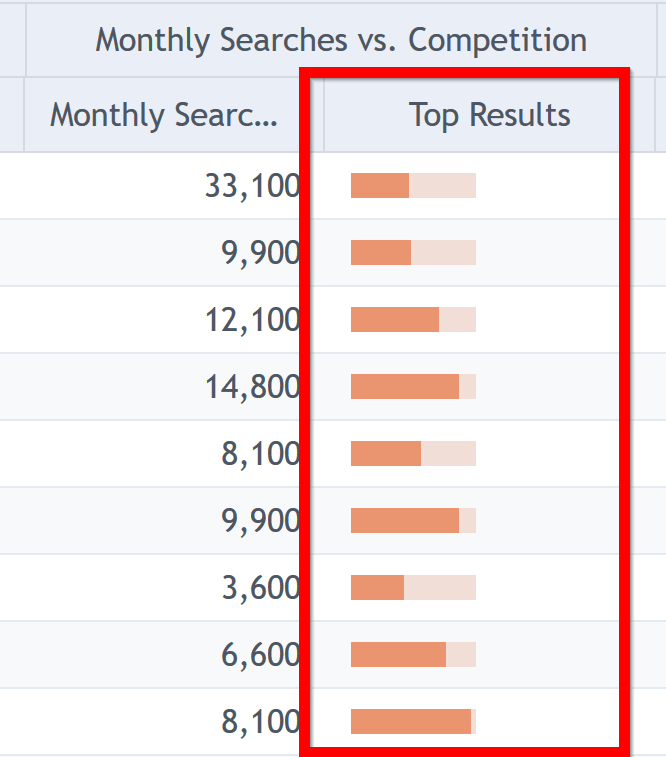
This bar indicates the difficulty of ranking for that particular keyword based on the current top 10 results.
And when you click on a keyword, you get a breakdown of that keyword’s search results.
When you do, SECockpit will display important competition metrics for the top 10 pages in the results… including Moz Domain Authority and total backlinks:
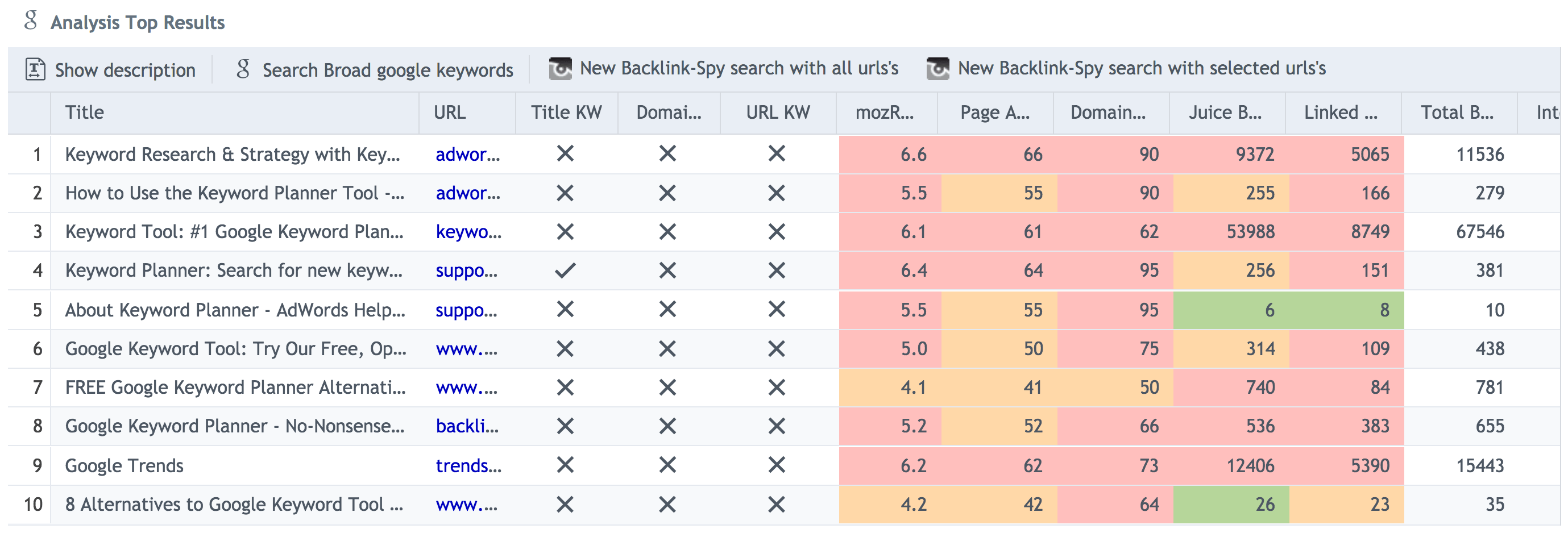
This is a great way to quickly size up competition without having to look one-by-one at the SERPs.
And you go back to the keywords page, you can actually add at least 20 more columns to the results:
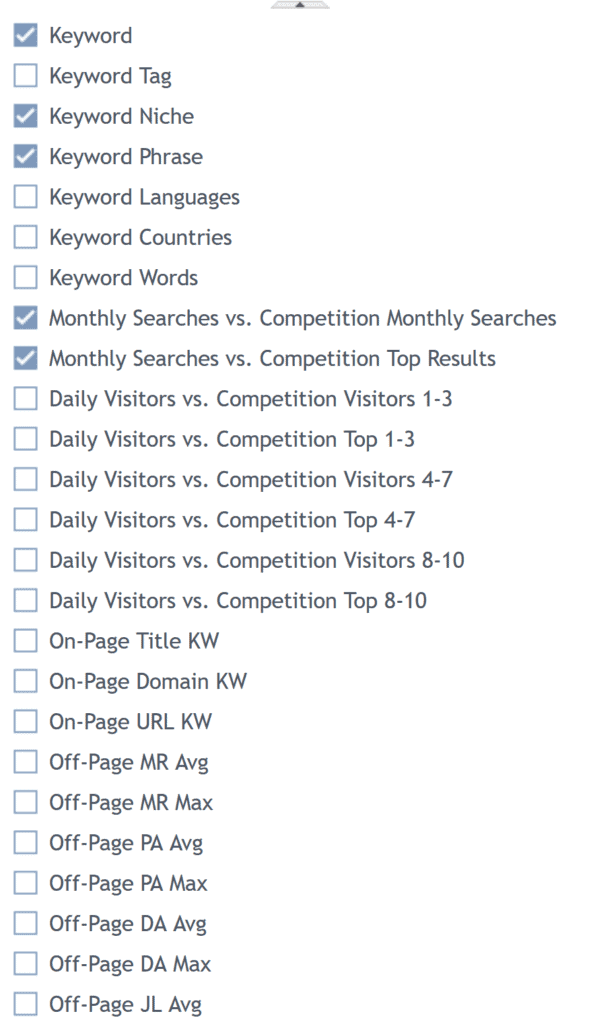
For example, you can see a ratio of the keyword’s competition in comparison to its search volume. Or you can get a comparison of the estimated traffic you’ll get from hitting the top 3 for that keyword. And lots more.
My Favorite Feature: Filtering
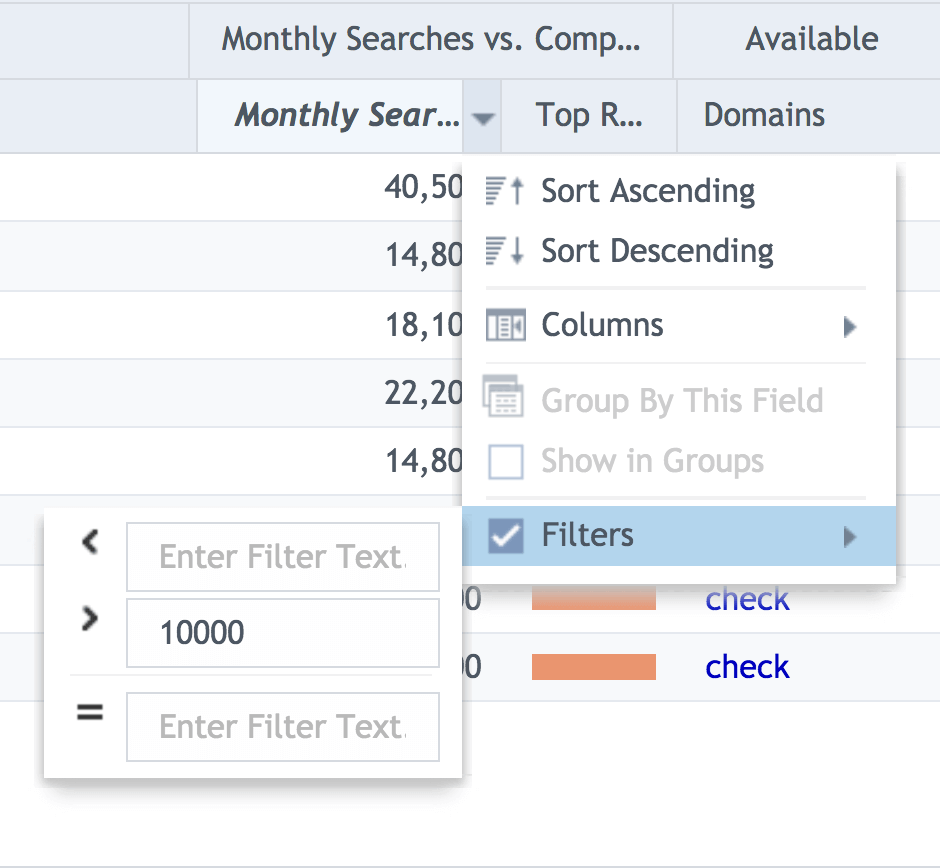
You can use over 100 filters to find the keywords that you want.
For example, do you only want keywords that get searched for at least 10k times per month? Done.
Or maybe you want terms that have the best ratio of search volume and competition. You got it.
BRIAN’S BOTTOM LINE
Clunky? Yes. Intuitive? Heck no. Feature-rich? Absolutely. If you want lots of advanced features, and don’t mind a steep learning curve, definitely check out SECockpit.
7. Google Keyword Planner
Tap into Google’s massive keyword database.
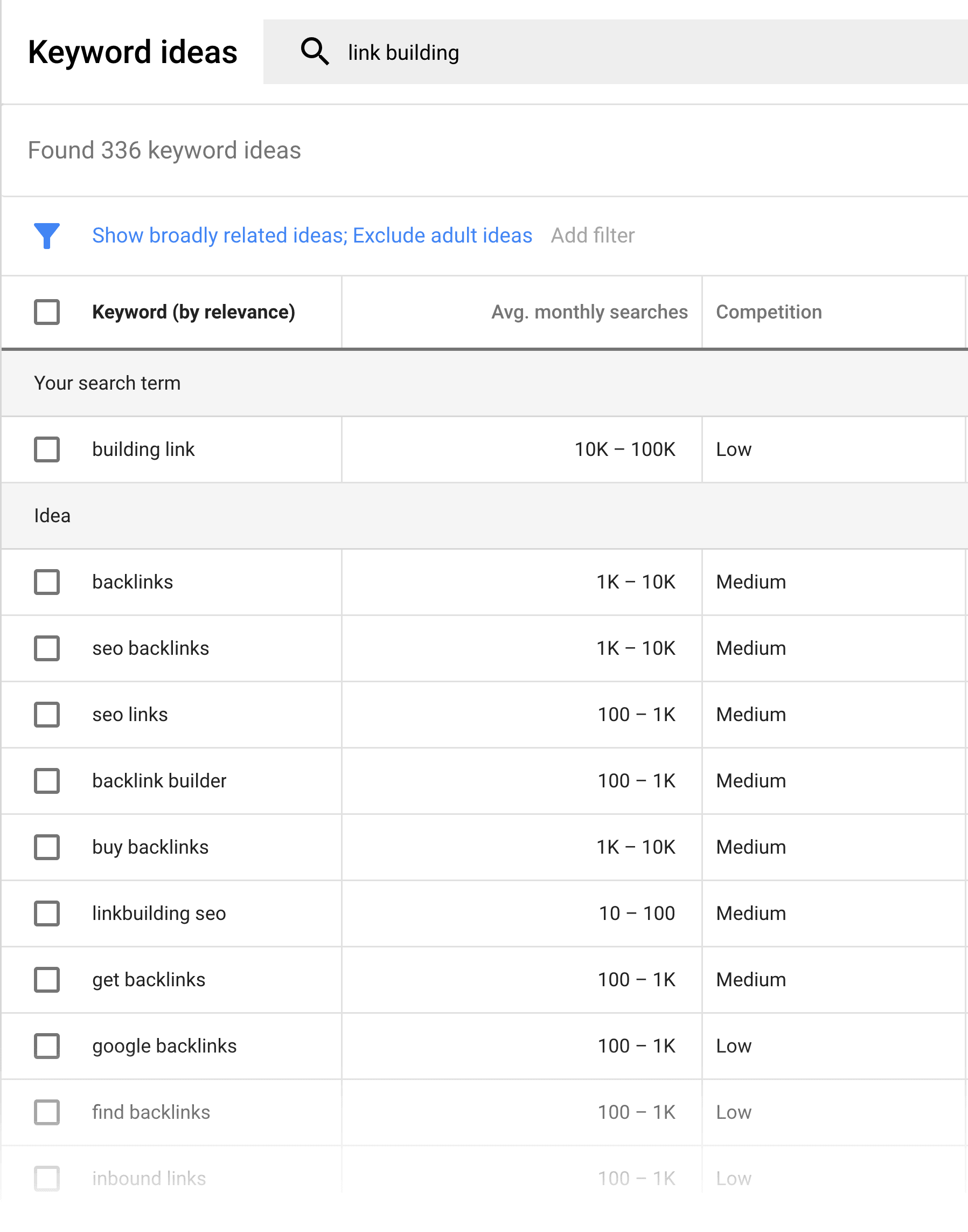
The GKP is pretty vanilla compared to most other keyword research tools.
So why use it?
Because the data you get from it comes straight from Google.
(So you know its legit)
My Favorite Feature: “Top of page bid”
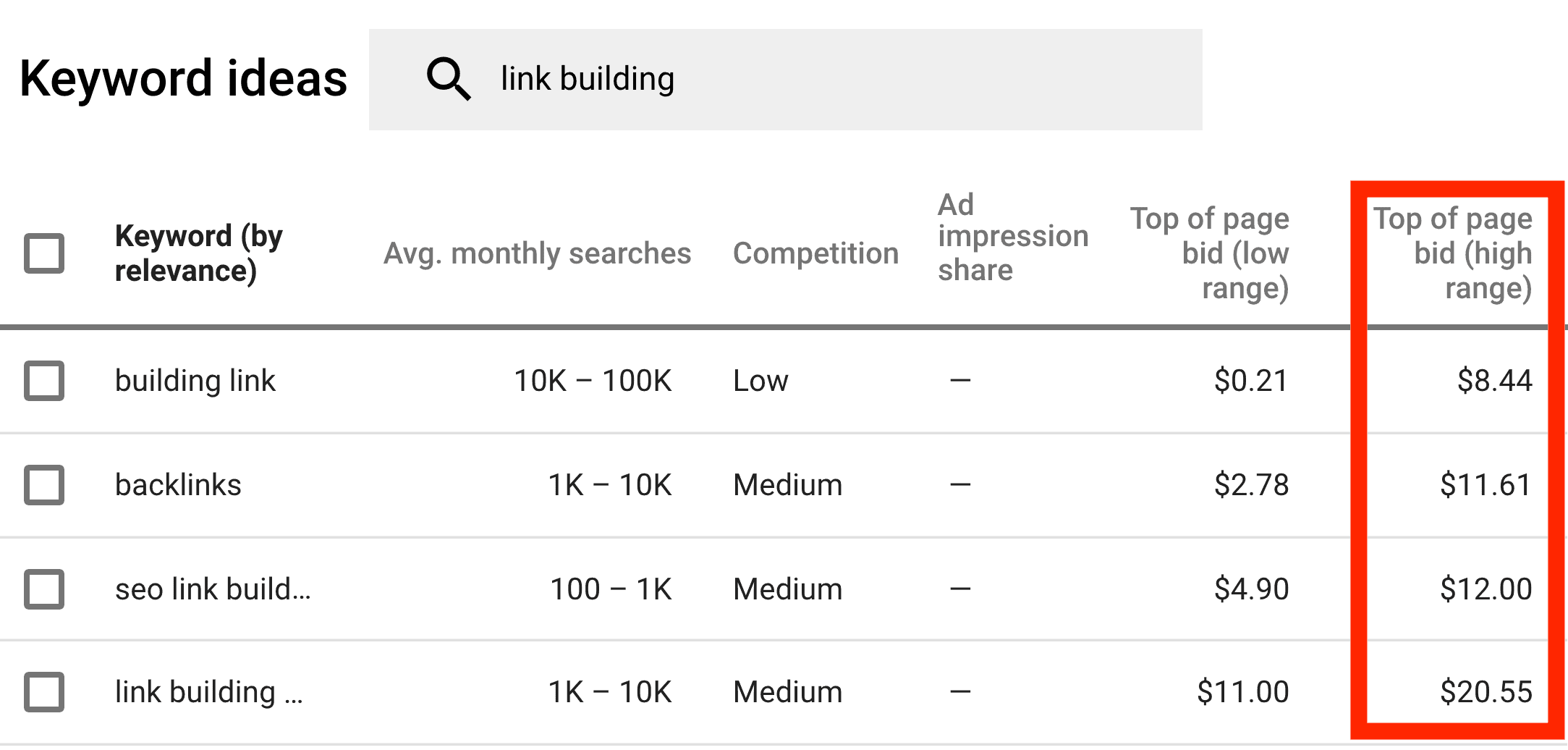
This is how much people advertisers are bidding on a keyword.
For example, of you see a top of page bid of $10, people are spending an average of 10 bucks per click.
Obviously, the higher this number, the more commercial intent that searcher has.
BRIAN’S BOTTOM LINE
The data in the GKP is the most reliable out there. That said, because it’s designed for Google Ads, using it for SEO can be tricky. This Google Keyword Planner Guide shows you how the GKP for SEO-focused keyword research.
8. KeywordTool.io
Get boatloads of targeted keyword ideas.
Here’s another Google Suggest scraper (just like UberSuggest and Soovle).
What makes KeywordTool unique?
Two things:
First, KeywordTool gives you A LOT of keyword suggestions.
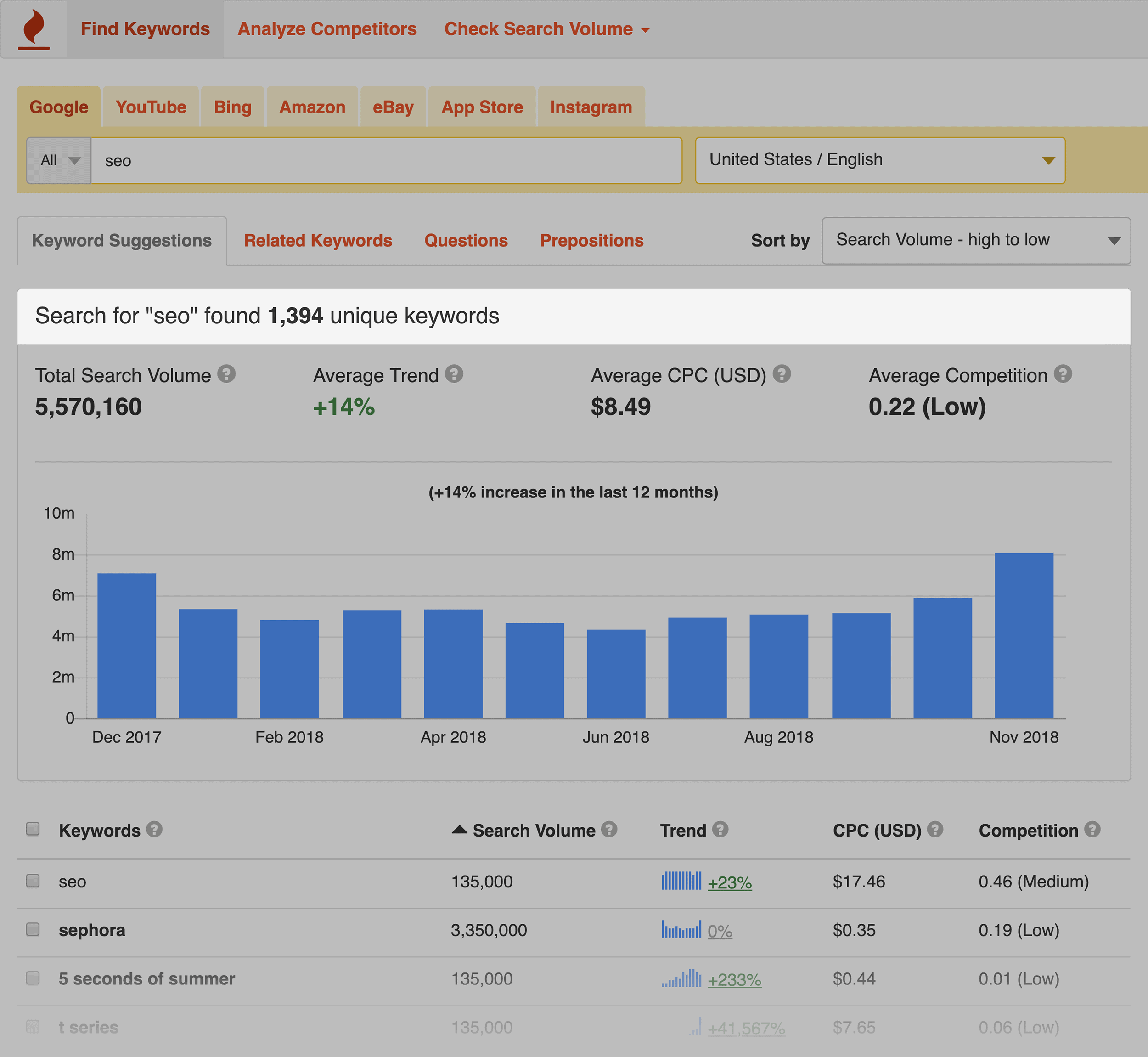
For example, I just did a search for “SEO”… and got 1,394 relevant keywords.
Not bad.
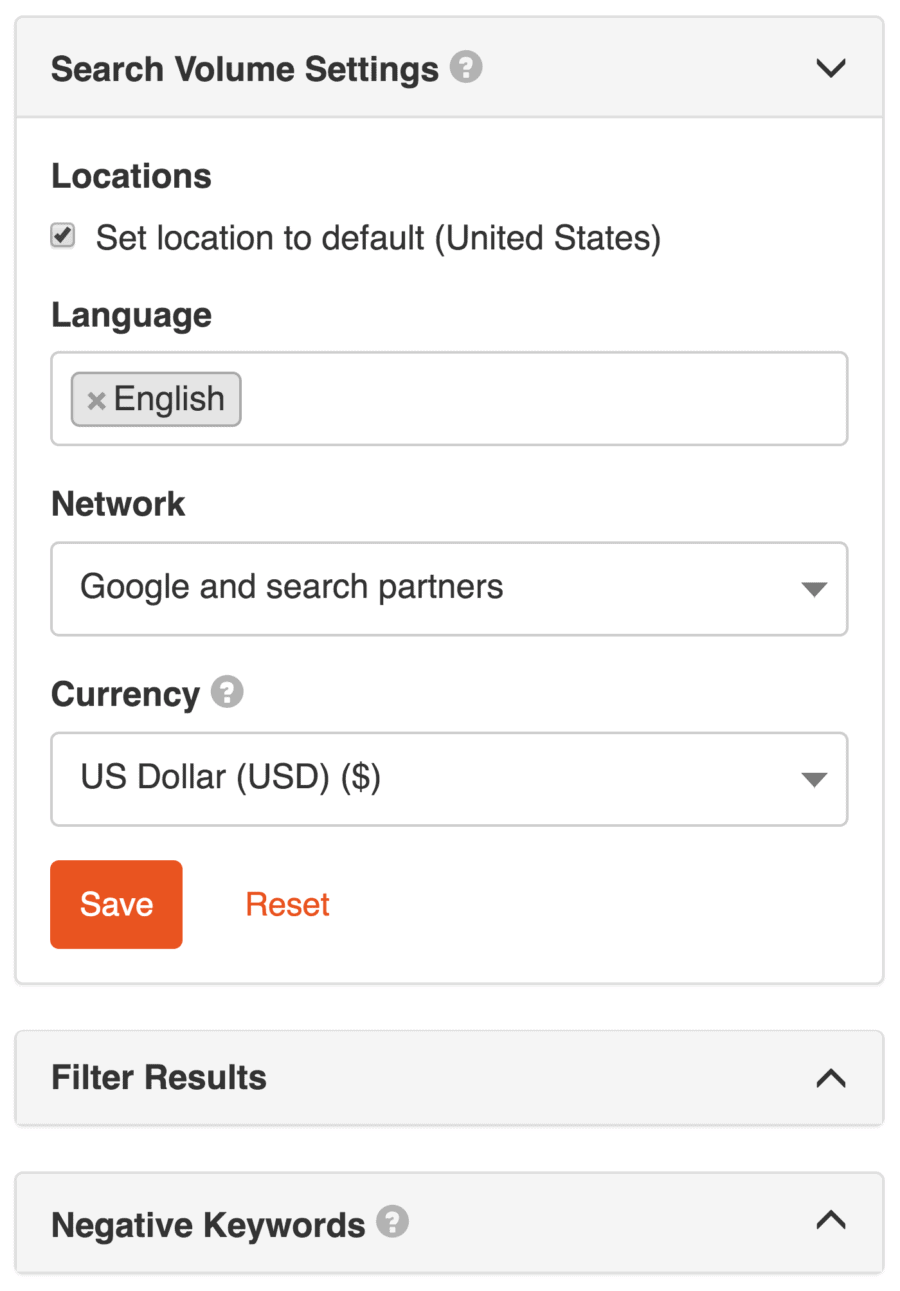
Second, you can easily filter, drill-down or expand the results to find the right keywords for you.
My Favorite Feature: Analyze Competitors
This is a very cool feature I don’t see in many other keyword research tools.
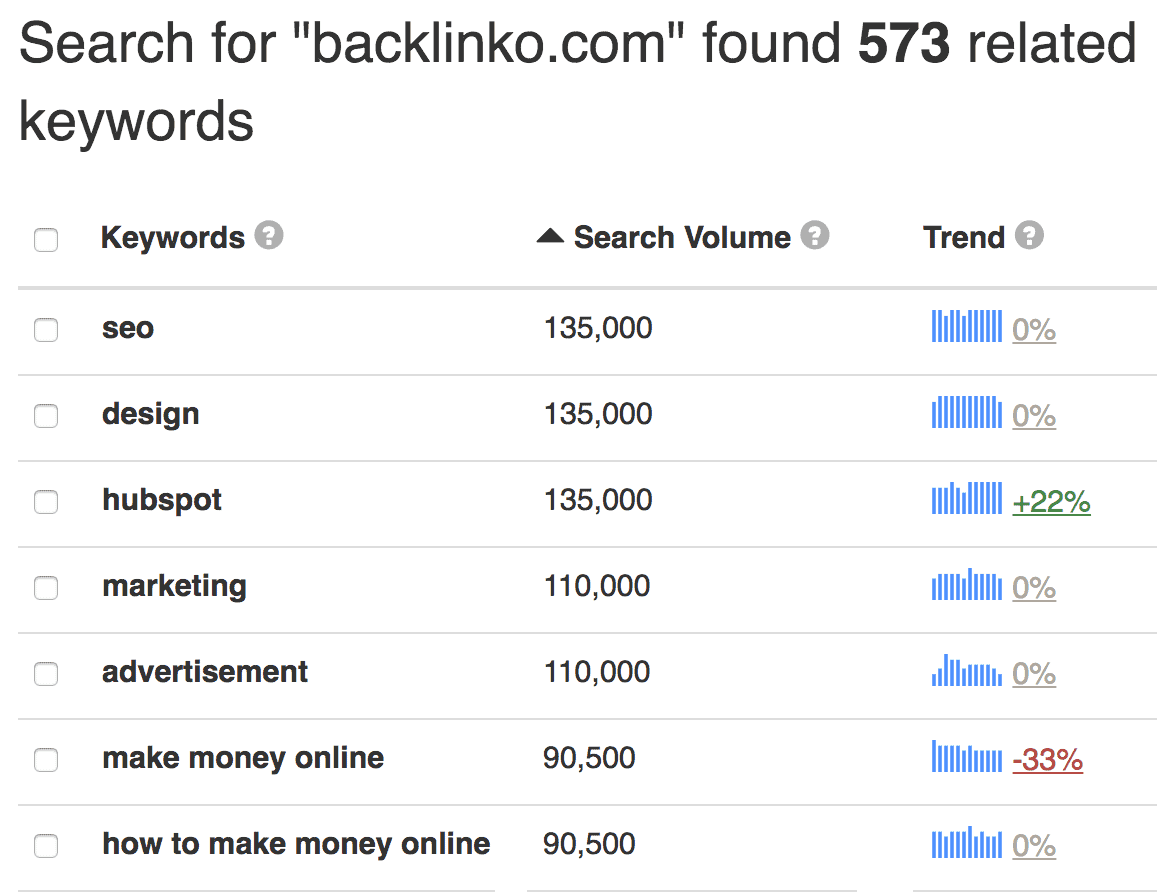
Just enter a competitor’s site… and the tool will generate a list of keyword ideas based on that site’s content.
For example, when I pop Backlinko into the tool, I get keywords that I’d expect.
(Like “SEO” and “blog”)
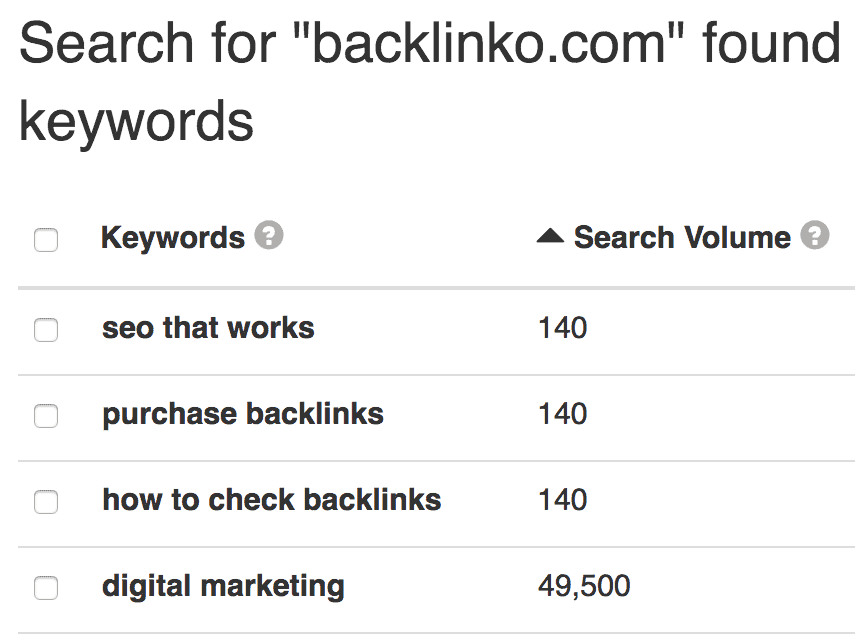
But I also came across terms that I don’t use anywhere on my site… but are closely related to the type of stuff that I write about.
(Like “digital marketing” and “how to check backlinks”)
BRIAN’S BOTTOM LINE
One of the best overall keyword research tools on the market. Worth a try.
9. Moz Keyword Explorer
Find keywords that will generate the most traffic.
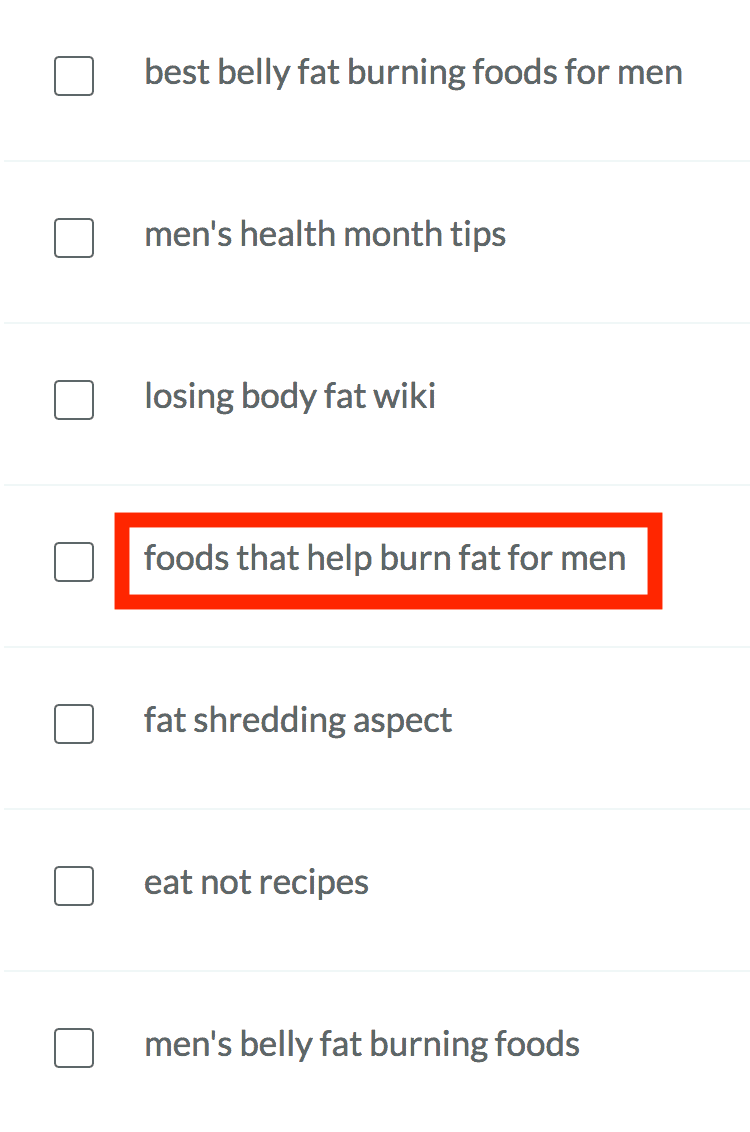
Moz’s Keyword Explorer does an awesome job of finding “lateral” keyword ideas.
For example, take a seed keyword like “weight loss”.
Like most other tools, you get a list of closely related keywords:
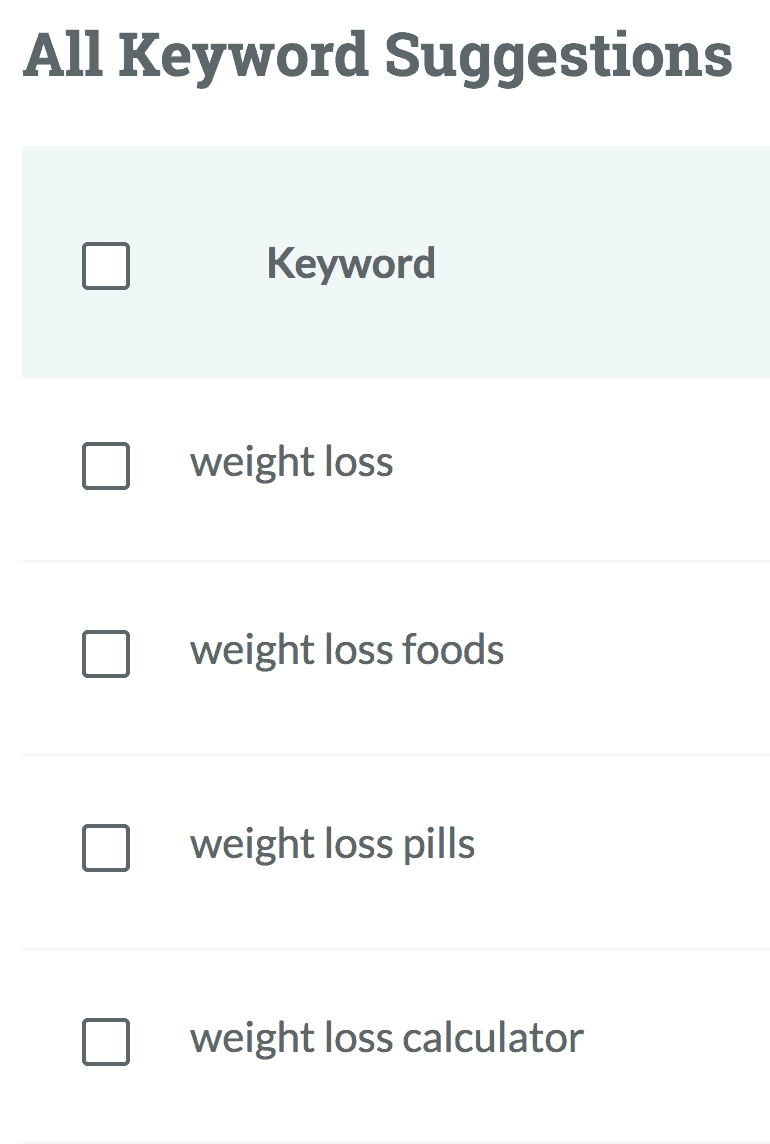
But what makes Moz unique is that it’s SMART.
Which means you get outside-the-box suggestions that you probably won’t find anywhere else.
My Favorite Feature: “Organic CTR” and “Priority”
These two awesome features let you know how many clicks you can expect to get from your target keyword.
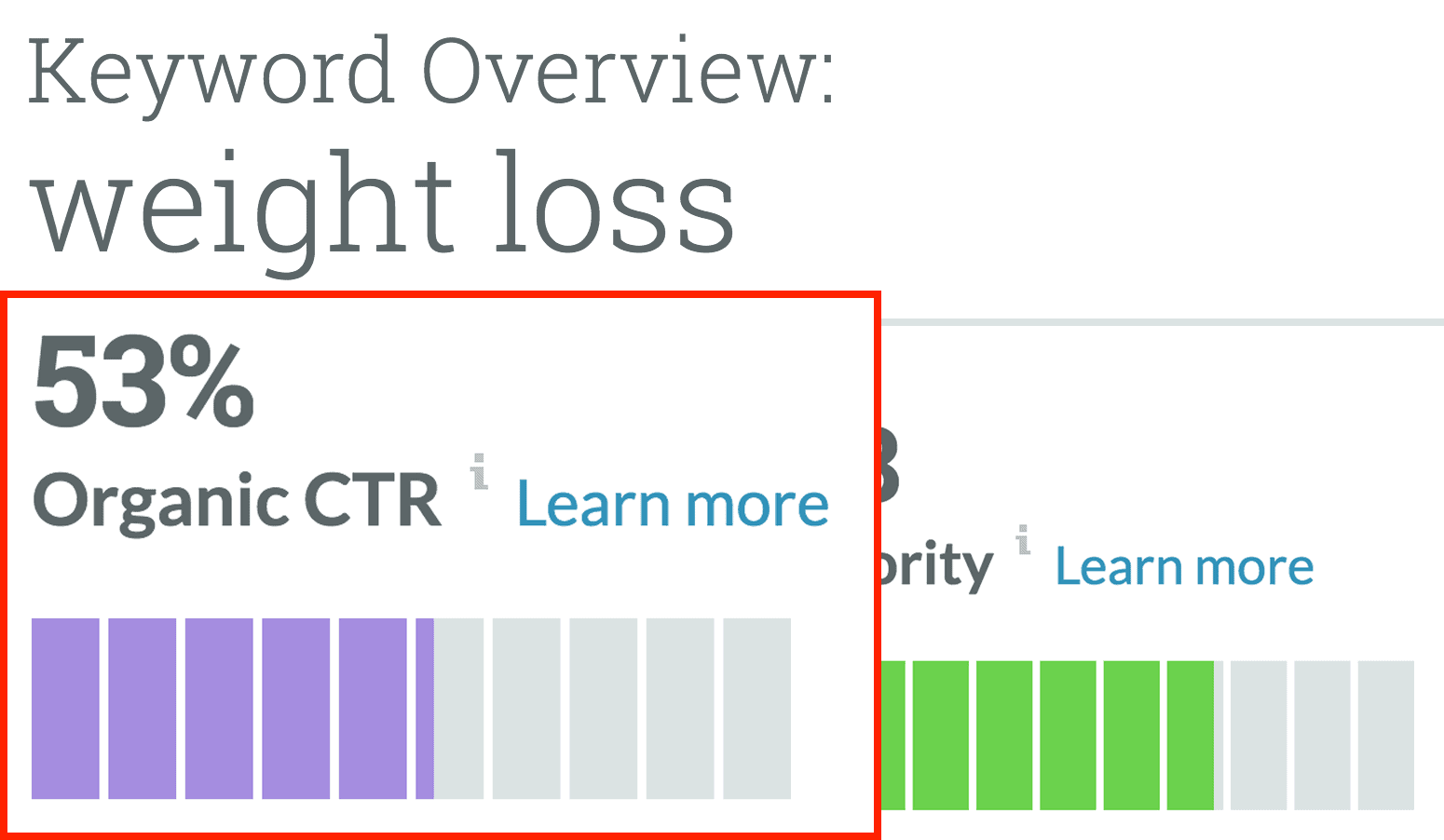
Organic CTR is the number of clicks you can expect to get if you crack the top 10. For example, if a SERP has a ton of PPC ads, news results, and a knowledge graph, your CTR is gonna be low.
Priority takesCTR, search volume and difficulty into account. It’s an “overall” score of whether or not you should target a particular keyword.
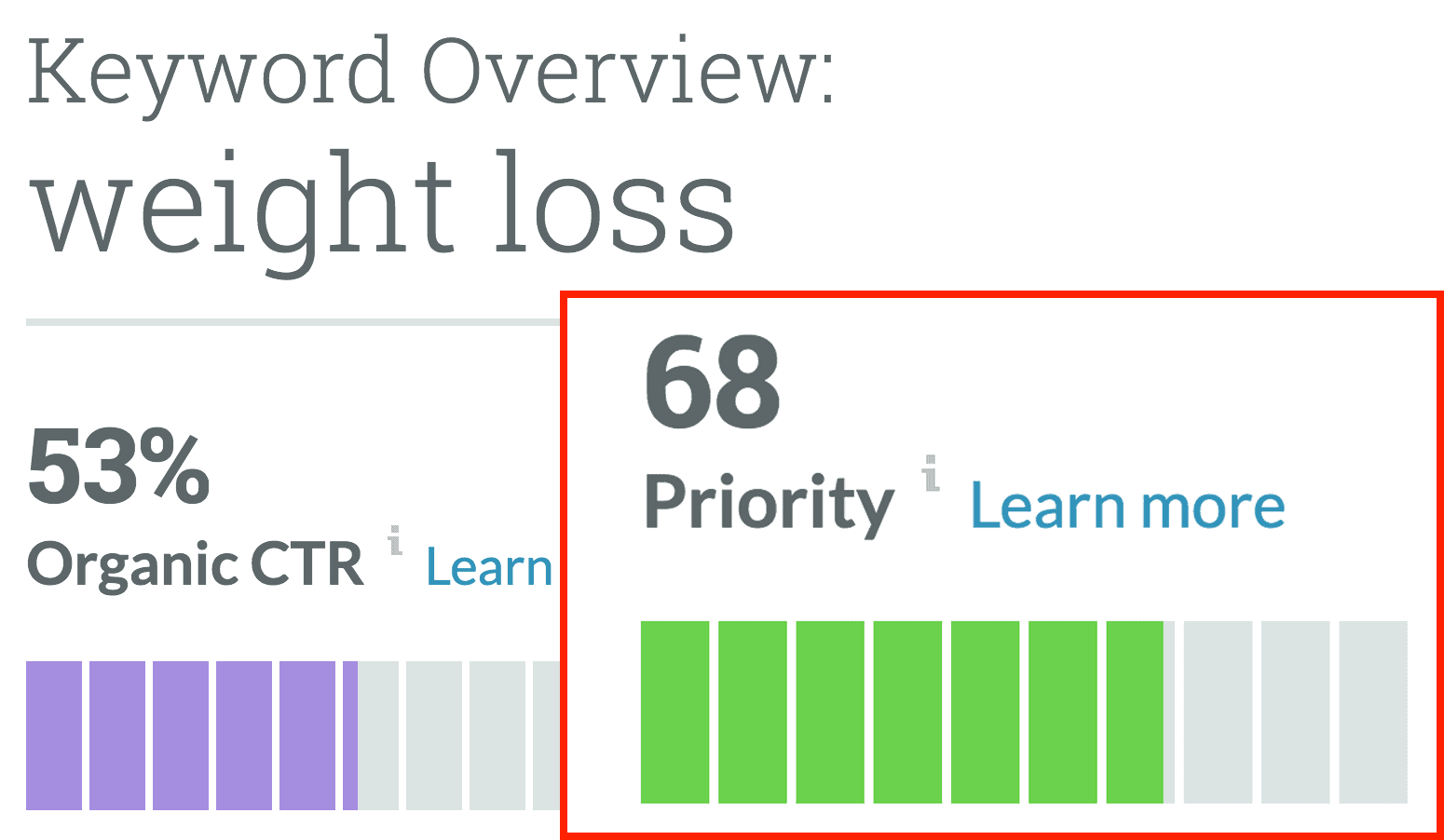
So if you’re overwhelmed by keyword data, you can use this single metric to find keywords that are going to bring you the most traffic from Google.
BRIAN’S BOTTOM LINE
Moz’s keyword tool is pretty darn awesome. Unfortunately, it’s not a standalone tool (you have to pay for their entire suite of SEO tools to use it).
10. Keywords Everywhere
Get search volume (and more) wherever you go.
Keywords Everywhere is a paid keyword research tool that displays keyword data on top of 10 websites …including Ebay, Amazon and Answer The Public.
That way, you don’t need to copy and paste keywords into the Google Keyword Planner. The data shows up in your Chrome browser. Very cool.
My Favorite Feature: “People Also Search For”
Get a list of keywords related to your search term… in the Google search results.
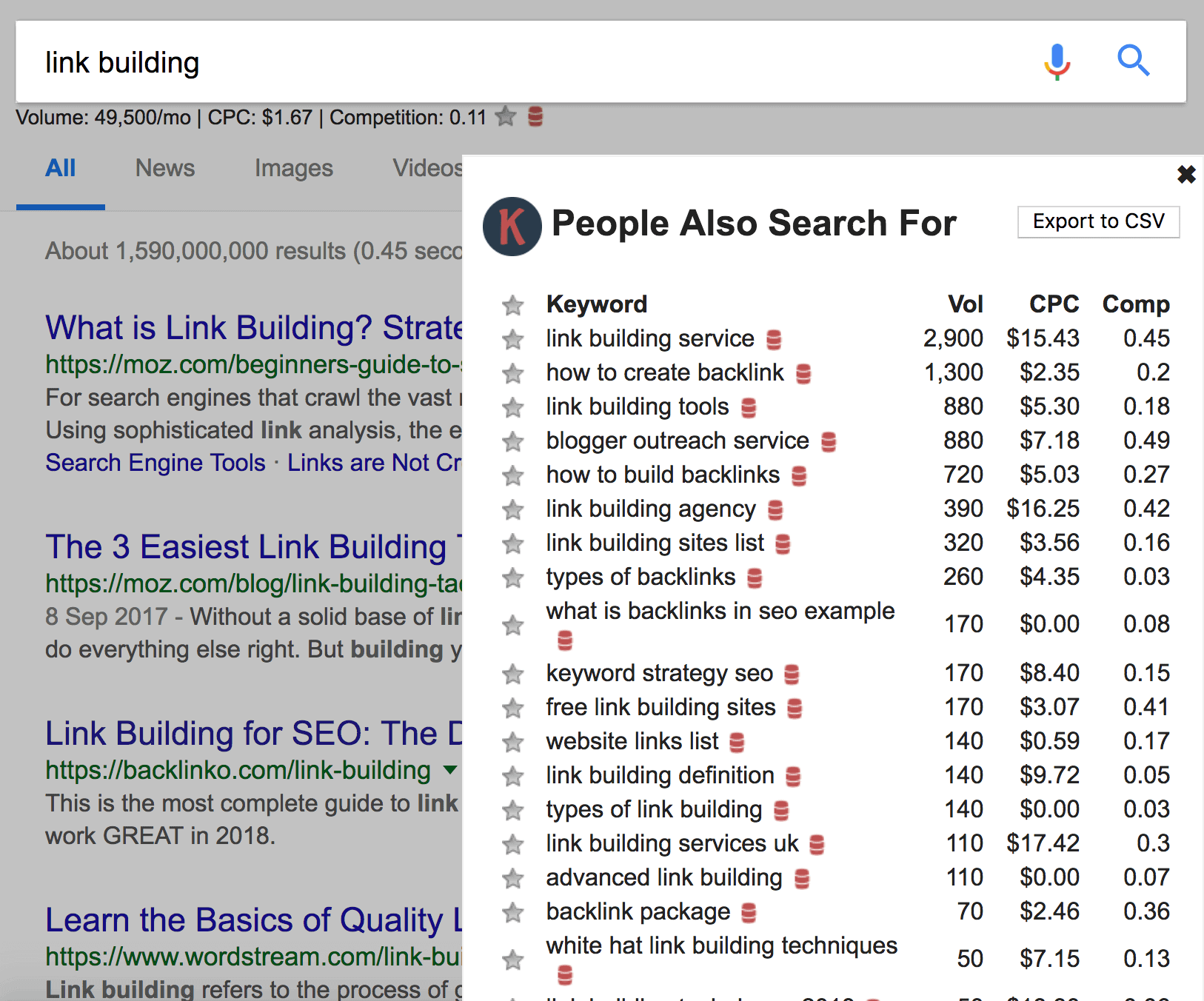
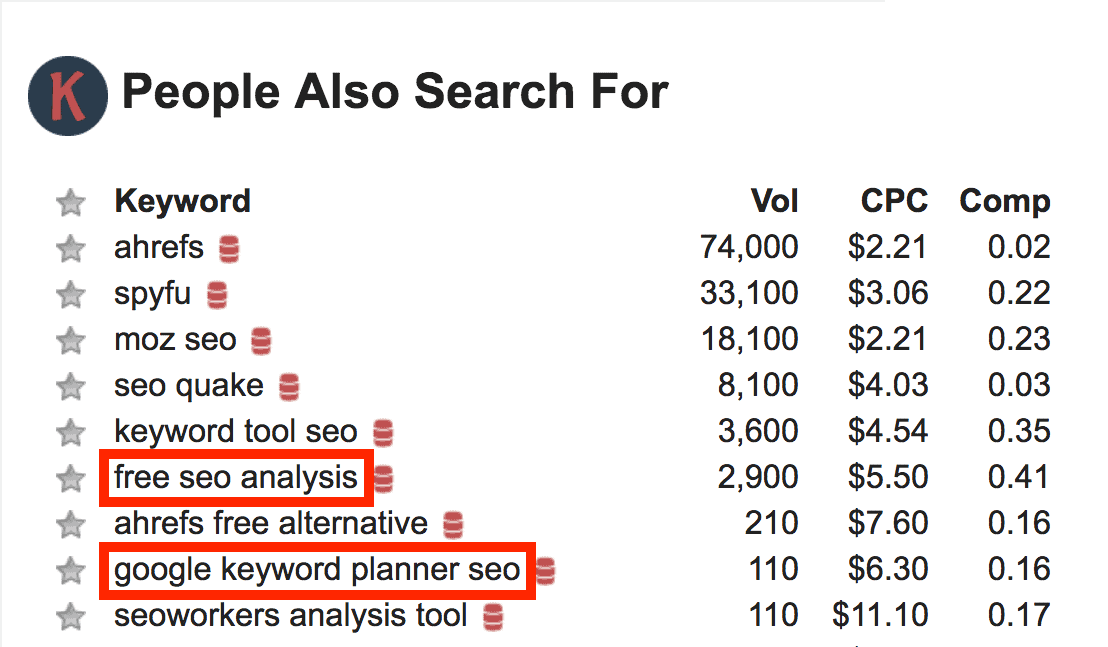
What’s cool about this feature is that you can find keywords that your target customer searches for when they’re not searching for what you sell.
For example, when I search for “SEO Tools”, I see terms like “Google Keyword Planner SEO” and “”Free SEO analysis”.
(Both of which get decent amounts of searches every month)
Nice.
BRIAN’S BOTTOM LINE
If you’re serious about keyword research you NEED to install this extension. It rocks.
google seo tools keyword ideas free
All of them differ in features, amounts and sources of data, and, definitely, prices. But which of them do you really need? And, most importantly, do you have to fork out hundreds of dollars a month, or is there a way to cut the costs?
Today we’ll explore 8 of the best free keyword research tools. Each of them best fits a specific keyword research task and does the job no worse than their paid alternatives.
1. Rank Tracker
To find the most ample list of keyword variations and analyze their SEO profitability.
When to use:
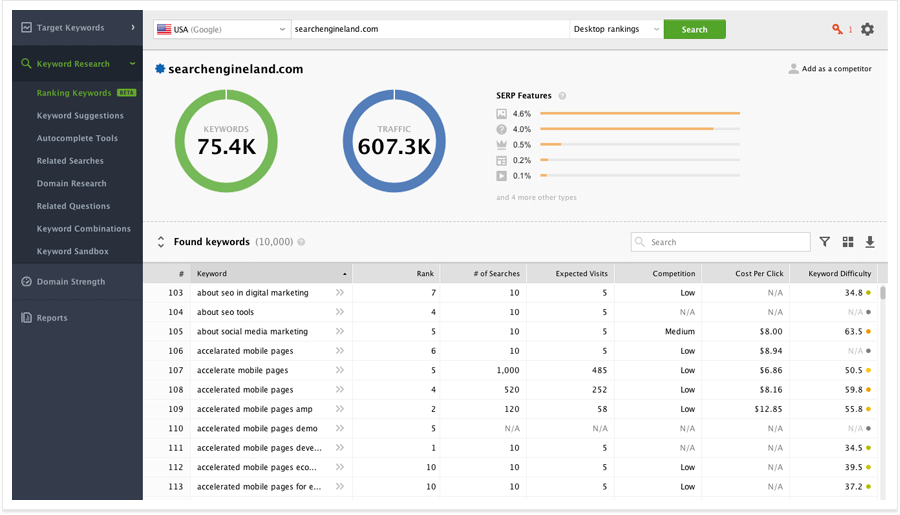
Your best SEO keywords are often not very obvious. To find real keyword gems, you need to dig out all the possible variations from multiple data sources. That’s the essence of keyword research.
And this is where Rank Tracker comes in especially handy with 23 different keyword research tools inside it:
- Suggestions from Google, Bing, Yahoo, and Amazon;
- Google Ads Keyword Planner and Google Search Console integration;
- Database of all SEO keywords your competitors rank for;
- Long-tail keyword and question generator;
- Popular misspellings and permutations;
- And more.
Using the tools one by one, you get the most ample list of keyword ideas. More to that, you can analyze the keyword difficulty and traffic potential of each keyword you get. This lets you focus the SEO efforts on what takes the least effort to bring in the most traffic.
Free version:
Even though the tool has a more feature-rich paid version, the 100%-free version is absolutely enough for keyword research. It lets you use all the research tools and analyze the keywords’ traffic potential.
2. Google Search Console
To discover “low-hanging fruit” traffic growth opportunities for your current keywords.

When to use:
Google Search Console is the place to analyze your current SEO keywords with their average Google positions, impressions and CTRs.
Looking through this research data is a great way to find unexpected SEO shortcuts. For example, if your URL currently ranks on page two or three, Google already considers it pretty relevant for the keyword. And the URL might need just a little SEO boost to storm onto page one and start bringing you a lot more traffic.
Or you might notice that some of your page-one ranking keywords underperform in terms of clicks (have low CTRs). A little tweaking of their SERP snippets or adding the Schema markup could work wonders here.
Free version:
Google Search Console is a free keyword research tool.
3. Google Ads Keyword Planner
To decide which keywords to target with SEO and PPC.
When to use:
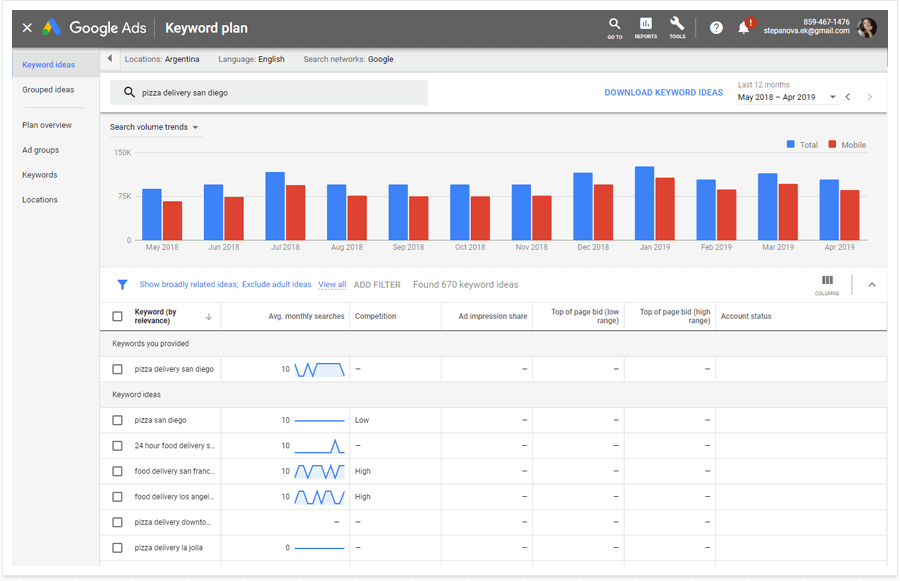
For some keywords, low ad bids make it reasonable to simply purchase keyword clicks with PPC. For others, overly expensive clicks mean you need to win over the traffic with SEO.
So, before starting out any search engine marketing campaign, you need to split your keyword list between SEO and PPC targeting. And the best place to look for the needed data is, obviously, Google Ads Keyword Planner.
The tool shows you keyword suggestions, search volumes, cost-per-click data, advertiser competition and seasonal traffic fluctuations, all in one place. And it even lets you estimate the prospective PPC spends in your niche.
Free version:
Google Keyword Planner is a free keyword research tool. However, keep in mind that unless you are already spending enough money in Google Ads campaigns, your search volume analysis is limited to ranges (rather than exact search volumes). And you might need another tool (like Rank Tracker) for more precise search volume analytics.
4. AnswerThePublic
To find keyword suggestions through popular questions for featured answers and voice search optimization.
When to use:
With Google’s ability to better understand natural language, searchers got used to phrasing their queries as questions rather than separate words. The rise of voice search also helped this trend along.
Making your content to answer the exact questions is one of the key aspects of your keyword research success. Plus, question-based content has a bigger chance of squeezing into Google’s featured answers or the so-called “position 0” results.
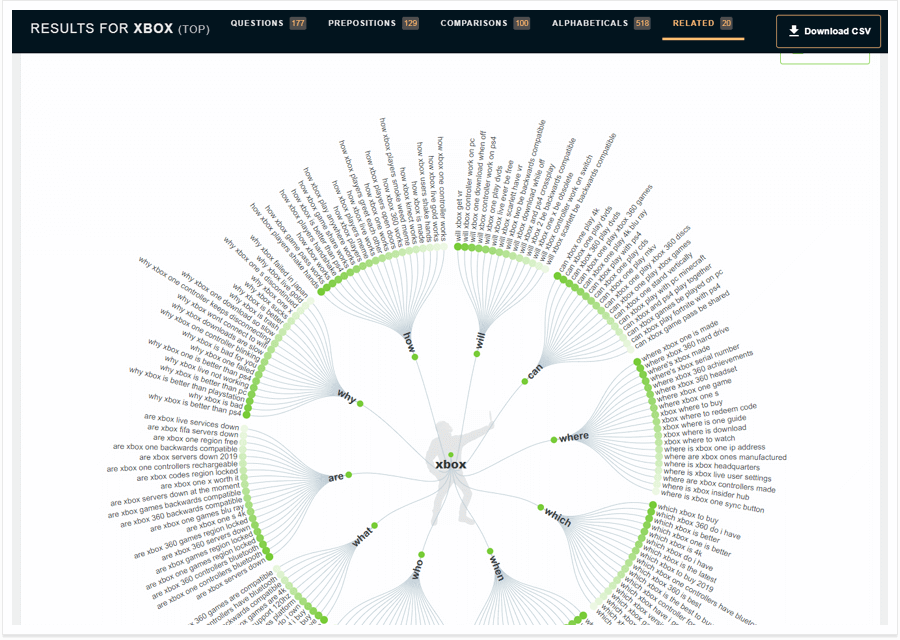
The quickest and easiest way to find popular questions related to your business niche is AnswerThePublic – a no-brainer keyword tool that combines your main keywords with various question words (like who, what, why, etc.).
Along with questions, you will also get a handful of keyword ideas through “preposition” keywords (when your seed keyword is combined with another keyword via a preposition) and “comparisons” (like “your keyword vs another keyword”).
Free version:
AnswerThePublic is a free keyword generator.
5. Keyword Tool Dominator
Perfect keyword research tool for Amazon, Etsy and Ebay.
When to use:
The way your customers search Google differs from the way they search Amazon, Etsy, or Ebay. Google is used to find places to shop at, whereas Amazon et al. are searched for the actual goods they need.
For you as an Amazon vendor, it isn’t going to be enough to do keyword research for Google. You need to have your listing optimized for Amazon search as well.
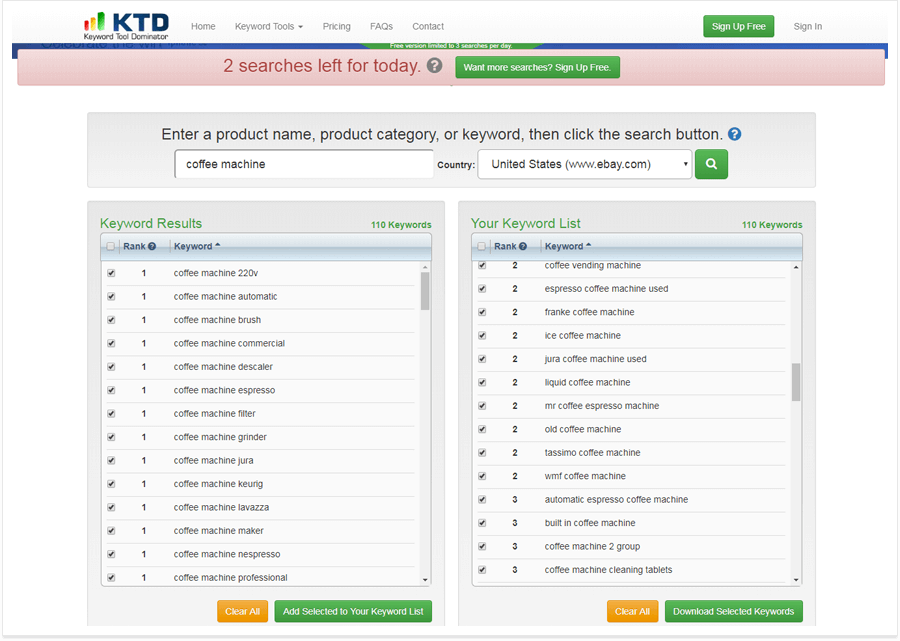
A nice tool to dig through the Amazon database is Keyword Tool Dominator. The only thing to keep in mind is that there’s no way to check keyword search volume. What you get is a plain keyword ideas list.
Free version:
While it’s a free keyword research tool, without a paid license, you are limited to three requests per database a day.
6. Google Trends
To find the right keywords for your local business.
Anybody doing local keyword research knows that search patterns differ between countries. But, surprisingly, the trends also vary considerably from region to region — this is why a precise local keyword tool is needed.
When to use:
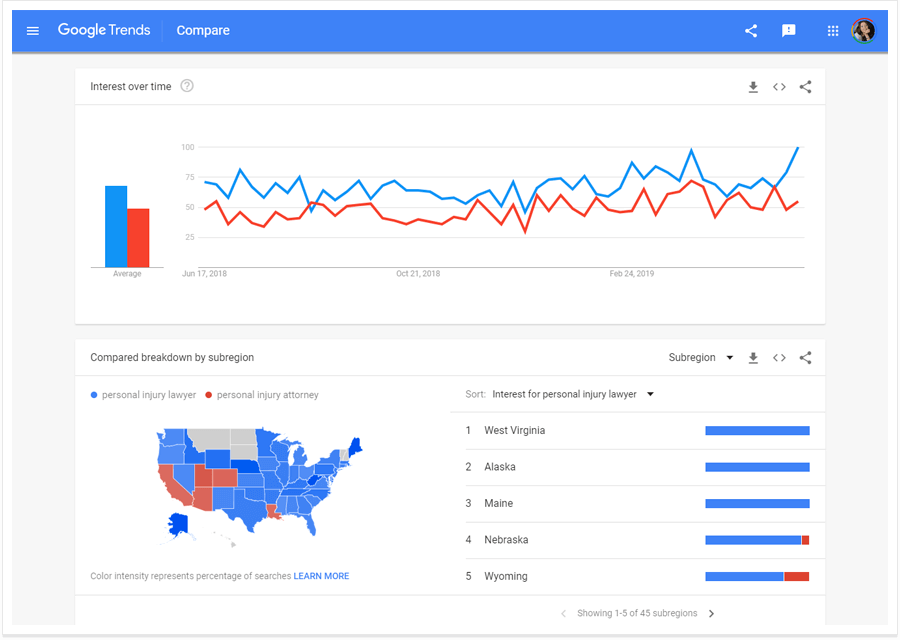
Google Trends is here to help you identify city/location specific search volume variation. Just have the tool compare two synonymic queries to see how misleading a country level keyword analysis could be for a local biz.
For instance, according to Google Trends, even though “personal injury lawyer” is the most popular search request throughout most of the US states, in Tennessee and New Mexico you’re way better off when optimizing for “personal injury attorney”.
Another no less important use-case is tracking down your keywords’ seasonal fluctuation and being able to reliably predict how this or that keyword is going to perform in it’s high and low seasons.
Free version:
Google Trends is a free keyword tool.
7. Google Correlate
To pull unexpected keyword ideas from adjacent niches.
When to use:
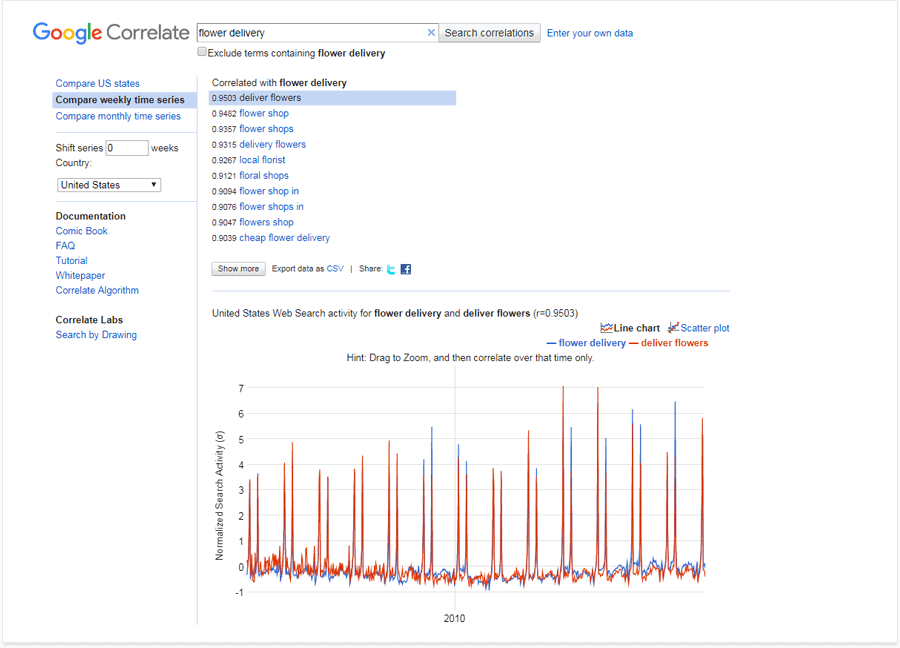
When thinking of seed keywords for your business, most probably you’ve already listed the most obvious ideas. Say, it comes as no surprise you flower delivery shop should target all kinds of “local florist” and “roses delivery” variations.
But Google Correlate helps you look at your keyword list at a new, unexpected angle, identifying the words, whose seasonal interest fluctuations correlate with that of your main keywords.
For the flower delivery example, our main keywords are in correlation with other female present delivery services: chocolate delivery, dipped strawberries and so on. And even if those have nothing to do with your biz, you can probably utilize them in content targeting for holidays like St. Valentine’s Day.
Free version:
Google Correlate is a free keyword tool.
8. Keywords Everywhere
To analyze keywords while you’re browsing.
When to use:
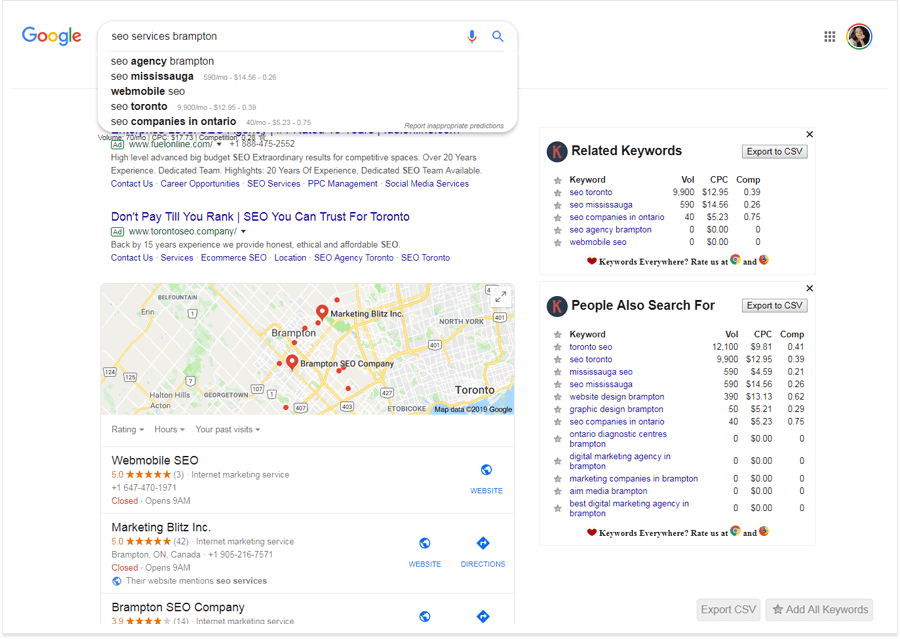
Keywords Everywhere is a free browser add-on which lets you do keyword research naturally while browsing Google, Bing, YouTube, etc.
Every time you search for something it will be considered a keyword, and you’ll get keyword search volume immediately in Autosuggest. On the SERPs themselves, a box with new keyword ideas is embedded on the right-hand side of the page, so that you can fill in your keyword list without actually leaving Google.
Conclusion
Let us know your thoughts in the comment section below.
Check out other publications to gain access to more digital resources if you are just starting out with Flux Resource.
Also contact us today to optimize your business(s)/Brand(s) for Search Engines